
Every year, a silent killer haunts the retail industry, draining billions from profits and drowning landfills in discarded dreams: product returns. It’s the invisible tax on online shopping, a frustration for consumers, and an environmental catastrophe. But what if there was a secret weapon, a game-changer poised to obliterate this problem and redefine how we shop forever? Enter AI Virtual Try-On, the disruptive force rapidly transforming fashion-tech and, quite possibly, your entire wardrobe.
This isn't just about trying on clothes on a screen; it's about a fundamental shift in perception, confidence, and sustainability, powered by the most sophisticated artificial intelligence.
From Google to Zara, every major player is scrambling to integrate this technology, and for good reason. The era of hesitant clicks, ill-fitting garments, and the dread of packaging up a return is rapidly fading into oblivion.
 Screenshot of a Google Photos AI digital wardrobe feature demonstrating virtual try-on.
The Multi-Billion-Dollar Problem AI Is Solving
The statistics are staggering. E-commerce returns account for an average of 15-30% of all purchases, translating into hundreds of billions of dollars in lost revenue annually. Beyond the financial drain, there's the logistical nightmare, the carbon footprint of shipping, and the sheer waste of perfectly good garments ending up in landfills. Consumers, too, bear the psychological cost of disappointment, inconvenience, and the perception of a poor shopping experience.
Traditional online shopping has always been a gamble. "Will it fit?" "Will it look good on me?" "Does the color match the picture?" These questions have fueled anxiety and, subsequently, the return epidemic.
But the advent of advanced AI Virtual Try-On technology offers a powerful antidote. By simulating how clothes drape, fit, and move on an individual's unique body shape, AI provides the confidence previously only found in a physical fitting room. Retailers are seeing this not just as a consumer perk, but as a critical survival tool to shore up their margins and enhance customer loyalty in an increasingly competitive landscape.
Beyond Static Images: The Evolution of Virtual Try-On
The journey of virtual try-on has been swift and astounding. What started as rudimentary augmented reality (AR) filters on social media, often resulting in comical and inaccurate renderings, has evolved into highly sophisticated, AI-driven simulations. Companies like DressX have become specialists, leveraging advanced fashion AI expertise to create hyper-realistic digital garments that can be “worn” by users in photos or even videos.
Google, a titan in AI innovation, is leading the charge on multiple fronts. Their advancements in AI Virtual Try-On now allow users to upload their own photos and view the fit of clothes in real-time, simulating how different body types influence fabric drape and movement. This isn't just about seeing; it's about experiencing. Imagine, for instance, seeing a dress gracefully move with a digital representation of your body, rather than a generic mannequin. This level of realism, powered by advanced AI models, dramatically reduces uncertainty and boosts purchase intent. Zara, ever the fast-fashion pioneer, quietly rolled out AI-powered virtual try-on in late 2025, and the positive reviews immediately validated its impact across the industry. The future of online fashion is here, and it's interactive.
 Screenshot of a Google Photos AI digital wardrobe feature demonstrating virtual try-on.
Your Digital Wardrobe: Google Photos and the Future of Personal Style
The concept of a "digital wardrobe" is no longer sci-fi; it's becoming a tangible reality, largely thanks to Google. A new Google Photos feature allows users to catalog the clothes they already own directly from their library. Imagine an AI that understands your existing style, suggests new pieces that complement your current collection, and even allows you to virtually try on potential additions to see how they integrate. This isn't just about trying on a single item; it's about curating an entire personal fashion ecosystem.
This innovation extends beyond primary garments. The accessory economy, too, is getting a brain upgrade. From watches to earrings, AI is changing how we shop for the items that express personality and complete a look.
The potential for hyper-personalization is immense. Your digital self could become your ultimate style consultant, learning your preferences, understanding your body, and suggesting outfits with unprecedented accuracy. This deep integration makes the AI Virtual Try-On experience seamless and deeply personal, moving from a novel gadget to an indispensable styling tool.
The Unseen Threads: Data, Personalization, and Potential Pitfalls
While the benefits of AI Virtual Try-On are clear, it’s crucial to acknowledge the unseen threads woven into this technological fabric. To deliver hyper-personalized experiences, these AI systems require data – lots of it. From body measurements and clothing preferences to historical purchase patterns and even facial recognition, the data footprint can be extensive. This raises pertinent questions about privacy, data security, and the ethics of increasingly intimate AI surveillance in our daily lives, a concern highlighted even in some artistic expressions of fashion and technology.
As our digital reflections become more sophisticated, so too does the potential for companies to understand us on an unprecedented level.
While this promises unparalleled convenience and tailored recommendations, it also necessitates a critical conversation about who owns this data, how it's protected, and the boundaries of algorithmic influence on personal style and identity. Balancing innovation with ethical responsibility will be paramount as this technology becomes ubiquitous.
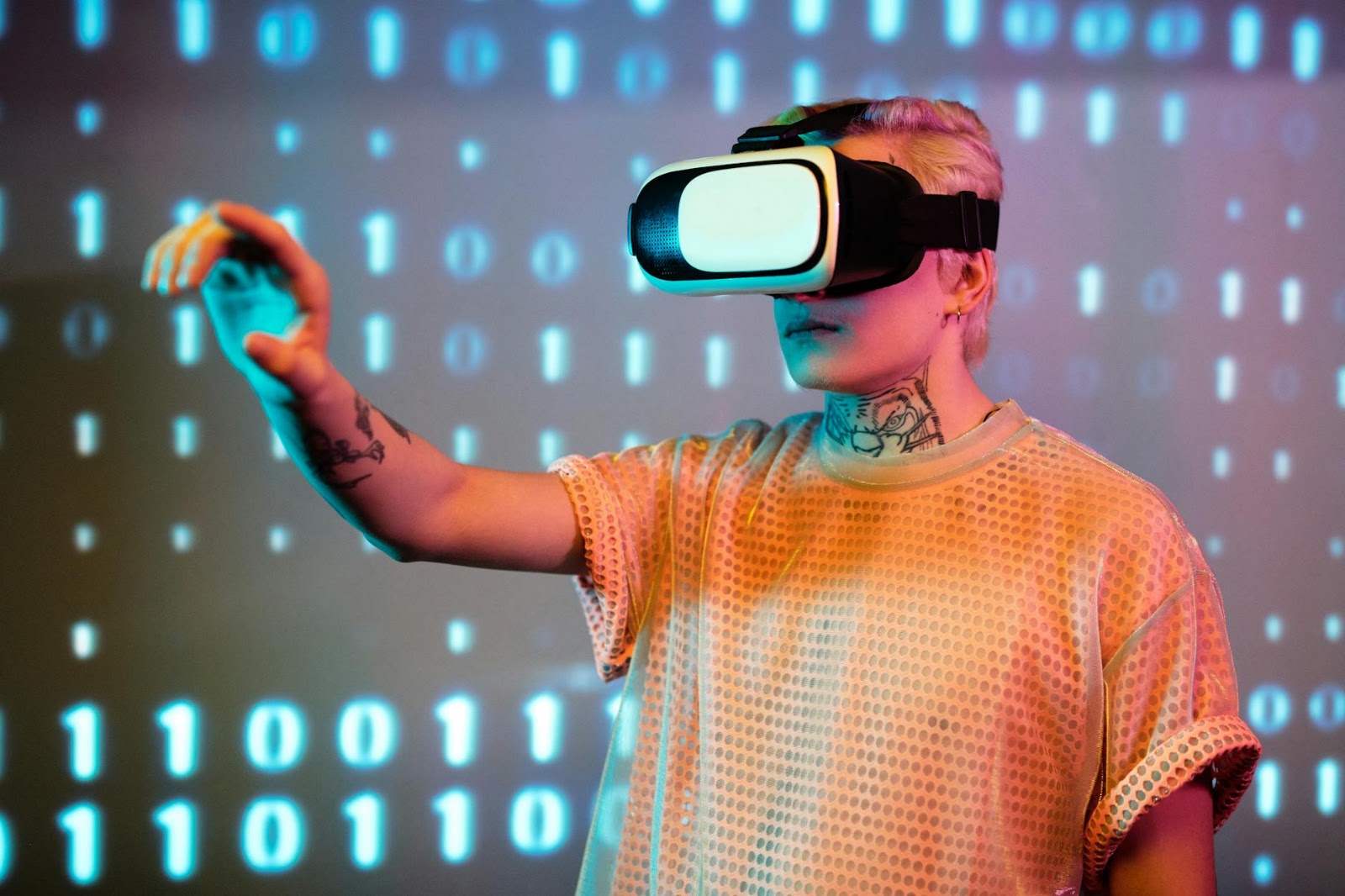 Customer interacting with augmented reality for AI virtual try-on in a modern retail store.
The Future is Now: What AI Virtual Try-On Means for Consumers and Retailers
For consumers, the era of AI Virtual Try-On heralds an end to shopping guesswork, a significant boost in purchasing confidence, and a more enjoyable, efficient online experience. No more agonizing over sizing charts, no more disappointment upon delivery, and significantly less time spent on returns. For retailers, it’s a lifeline – a strategic solution to the "silent killer" of returns, leading to increased profitability, reduced operational costs, and a greener supply chain.
As the technology continues to mature, we can expect even more immersive and integrated experiences. Imagine walking into a physical store, and your digital avatar, already aware of your preferences, suggests items you might love, allowing you to try them on virtually before even touching a hanger. Or, perhaps, an AI stylist curates entire looks for specific events, complete with accessories, all tried on virtually. The fusion of the physical and digital shopping worlds, powered by advanced AI, is not just a possibility – it's an inevitability. The revolution is here; it's time to virtually try it on.
```