
The fashion industry has a dirty little secret, a multi-billion dollar “silent killer” that quietly erodes profits, chokes supply chains, and contributes significantly to environmental waste: product returns. Imagine a world where that problem is virtually eradicated, where you can confidently buy clothes online knowing they'll fit perfectly without ever stepping into a physical changing room. This isn't science fiction; it's the audacious promise of AI virtual try-on fashion, and it's not just a fleeting trend – it’s a seismic shift poised to redefine how we interact with clothing, from discovery to checkout.
Forget everything you thought you knew about online shopping. The era of hesitant purchases and dreaded return labels is drawing to a close, ushered out by sophisticated artificial intelligence that’s making the fitting room obsolete. The revolution isn't coming; it's already here, championed by tech giants and innovative startups alike, pushing the boundaries of what's possible in digital retail. Are you ready to witness the transformation?
Beyond the Gimmick: How AI Virtual Try-On Actually Works (and Why It's Revolutionary)
For years, virtual try-on felt like a novelty – clunky, unrealistic, and more frustrating than functional. But today’s AI-powered systems are a different beast entirely. They leverage advanced computer vision, generative adversarial networks (GANs), and sophisticated 3D rendering to create incredibly realistic simulations of garments on your body, or on a diverse range of AI-generated models.
This isn't just a flat image overlay. These technologies can simulate how different body types influence the fit and movement of fabric, accurately depicting drape, texture, and how a garment might bunch or stretch. Companies like DressX and platforms such as VisualGPT AI Virtual Try On are at the forefront, transforming basic garment images into highly realistic, dynamic showcases. The underlying technology allows for two primary applications: customer-facing virtual try-on, where you see clothes on yourself, and AI fashion model photography, which generates professional on-model product images without the need for expensive photoshoots or diverse real models. The implications for speed, cost, and inclusivity are staggering. The days of struggling to visualize a dress on a model nothing like you are over.
The Google Effect: Big Tech's Bold Play in Fashion
When Google makes a move, the world takes notice. And in the realm of fashion-tech, their footprint is rapidly expanding. Far from a peripheral player, Google is embedding AI virtual try-on capabilities directly into the consumer experience. They've launched an AI-powered “wardrobe” feature in Google Photos, allowing users to 'try on' clothes they were previously captured wearing – a subtle yet powerful step towards making virtual try-on an everyday utility.
Furthermore, Google's partnerships, such as with DressX, signal a clear intent to dominate this space. They're not just offering a tool; they're building a new 'fashion AI virtual try-on stack,' a foundational layer for the digital fashion ecosystem. This isn't just about showing you what a shirt looks like; it's about making product discovery, fit assessment, and purchase decisions frictionless. Zara, a global fashion behemoth, quietly rolled out AI-powered virtual try-on in its app in late 2025, to overwhelmingly positive reviews. This move by a fast-fashion giant proves that AI virtual try-on isn't just for luxury brands or early adopters; it’s rapidly becoming a mainstream expectation. The message is clear: big tech isn't just influencing fashion; it's actively remodeling it from the ground up.
The Designer's Dilemma: Innovation vs. Authenticity
While consumers and retailers eagerly embrace the convenience and efficiency of AI virtual try-on, the creative heart of the fashion industry often views it with a mix of fascination and skepticism. Australian Fashion Week recently hosted a vibrant debate among local and international designers regarding the merits and detractions of AI. Is it a tool for unparalleled creativity and accessibility, allowing designers to experiment with forms, textures, and presentations in ways previously unimaginable? Or is it a soulless shortcut, threatening to dilute the very essence of human artistry and craftsmanship?
Some argue that AI can free designers from mundane tasks, allowing them to focus on true innovation. It democratizes the design process, making it easier for independent creators to visualize and showcase their collections without immense financial outlay. Yet, others fear the loss of tactile experience, the nuanced imperfections of handmade garments, and the human connection that defines fashion. This tension between algorithmic precision and artistic expression is a critical dialogue shaping the future of fashion. Ultimately, the question isn't whether AI will be used, but how designers will harness its power to augment, rather than replace, their unique vision. The most forward-thinking are already blurring these lines, using AI as a collaborator rather than a competitor.
From Pixels to Profit: The Business Case for Virtual Try-On
Beyond the glitz and glamour of cutting-edge tech, the most compelling argument for AI virtual try-on lies in its undeniable economic impact. Retailers are plagued by returns, often referred to as the industry's “silent killer” – a persistent drag on profitability that costs billions annually in logistics, processing, and restocking. Virtual try-on directly addresses this pain point.
By empowering customers to accurately assess fit and appearance before purchase, brands are seeing dramatic reductions in return rates. Companies like Rewarx highlight how virtual model try-on technology reduces returns and boosts conversions, offering practical guides for e-commerce operators. This translates directly into improved profit margins, reduced operational costs, and a significant boost in customer satisfaction. Furthermore, AI tools facilitate more efficient inventory management, reducing overproduction and waste – a critical step towards a more sustainable fashion industry. The investment in AI virtual try-on isn't just about staying competitive; it's about unlocking a new era of retail efficiency and profitability. It's an essential tool for any brand serious about thriving in the digital age.
 An abstract visualization of an intricate AI network powering the latest fashion-tech innovation, specifically for virtual try-on.
The Future Is Now: What's Next for Fashion-Tech?
The trajectory of AI virtual try-on fashion is only heading upwards. We're already witnessing hyper-personalization, where AI learns your preferences, body shape, and style to recommend garments that are not only aesthetically pleasing but guaranteed to fit. The convergence with Web3 and the metaverse promises even more immersive experiences, allowing users to try on digital garments for their avatars before purchasing physical versions, or even solely existing in the digital realm.
Brands are exploring generative AI to create entirely new collections, and virtual fashion influencers are gaining traction, often showcasing AI-rendered clothing. The boundaries between the digital and physical wardrobe are blurring, creating new opportunities for expression, commerce, and creativity. This isn't just about trying on a pair of jeans; it's about creating entirely new shopping ecosystems, powered by intelligent algorithms that understand individual needs better than ever before. The pace of innovation means that what seems futuristic today will be commonplace tomorrow.
 An abstract visualization of an intricate AI network powering the latest fashion-tech innovation, specifically for virtual try-on.
The Unstoppable Wave: Embracing the Future of Fashion
AI virtual try-on fashion is no longer a niche technology; it's a foundational pillar of the next generation of retail. It addresses critical industry challenges, enhances customer experience, and opens up unprecedented avenues for creativity and efficiency. From Google's deep integration to Zara's mainstream adoption, the message is clear: adapt or be left behind.
For consumers, it promises an era of confident, frustration-free online shopping. For brands, it offers a powerful antidote to the silent killer of returns and a gateway to higher profits and sustainability. The debate among designers about authenticity will continue, but the undeniable momentum of this technology ensures its place at the heart of fashion's evolution. The future of fitting rooms is digital, intelligent, and incredibly exciting. Don't just watch this revolution unfold; participate in it.
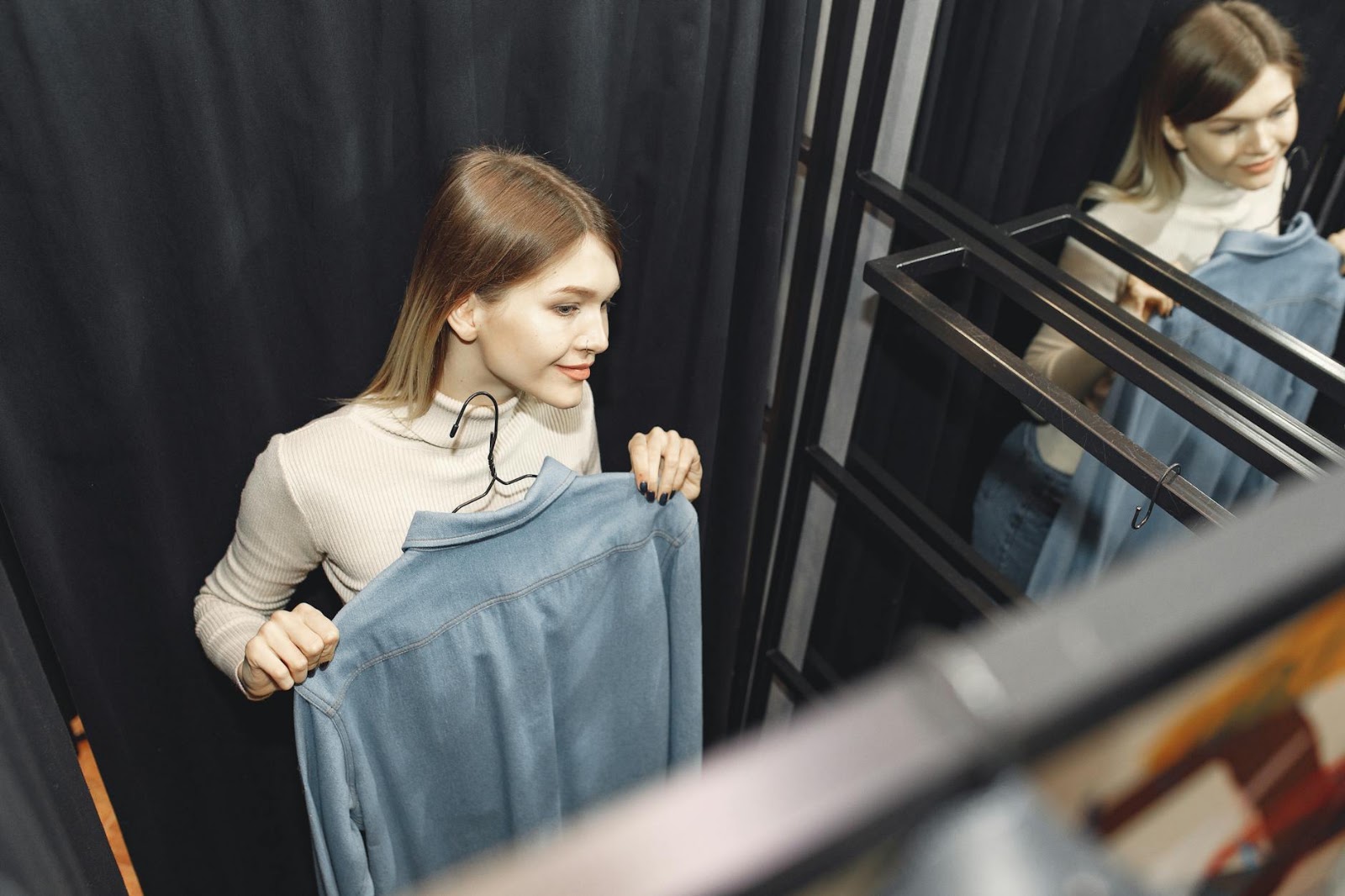 Customers happily shopping in a sleek, futuristic retail store, benefiting from seamless AI virtual try-on fashion solutions.