
The crypto market delivered a brutal wake-up call in Q1 2026. While headlines screamed about double-digit losses for Bitcoin and most altcoins, a select few like Tron and UNUS SED LEO quietly defied gravity, charting green amidst a sea of red. This wasn't luck; it was a stark indicator that the old guard of crypto price analysis is officially dead. If your strategies haven’t evolved beyond basic technical indicators and speculative news cycles, you’re not just behind—you’re a casualty waiting to happen.
The future of crypto isn’t about charting patterns; it’s about decoding an infinitely complex, institutionally-driven, and algorithmically-contested landscape.
 Investor grappling with Bitcoin volatility and the future of crypto price analysis
The Ghost of Q1 2026: Why Traditional Metrics Failed (Again)
The Q1 2026 market crash wasn't just another dip; it was a systemic shock that exposed the fatal flaws in outdated analysis methodologies. Bitcoin tumbled to its March low of US$66,400, not due to a single, easily identifiable catalyst, but a potent cocktail of rising US Treasury yields, escalating geopolitical tensions, and a staggering US$1.3 billion in leveraged positions wiped out. These weren't 'black swan' events; they were symptomatic of a market maturing—and weaponizing—against predictable retail behavior.
Traditional technical analysis, with its reliance on moving averages, RSI, and MACD, proved woefully inadequate. These indicators, once the bedrock of many trading strategies, are now easily front-run by institutional algorithms capable of processing vast swathes of data in milliseconds. When ETF outflows reached critical levels, or a tweet from a central bank hinted at rate adjustments, the market's reactionary environment became palpable, leaving retail investors scrambling to catch up. The simple truth is, if your 'analysis' can be condensed into a few lines of code, it’s already priced in—and likely being exploited.
Beyond the Candlesticks: The Rise of Predictive Analytics
To truly understand the future of crypto price analysis, you must abandon the notion that price action alone tells the full story. The real edge now lies in predictive analytics—a multi-layered approach that delves deep into the underlying mechanics of the blockchain and the broader sentiment landscape. This isn't just about 'on-chain metrics' as a buzzword; it's about mastering their nuances.
On-chain data offers a transparent ledger of activity that traditional markets can only dream of. Tracking wallet flows, exchange balances, mining difficulty, transaction counts, and stablecoin movements provides unparalleled insight into accumulation, distribution, and overall network health. For instance, observing a sustained outflow of BTC from exchanges to cold storage could signal institutional accumulation, a bullish precursor often invisible to candlestick charts. Similarly, monitoring the supply of stablecoins on exchanges can be a powerful indicator of potential buying power entering the market.
Crucially, sentiment analysis, once a rudimentary scan of social media, has been revolutionized by AI and machine learning. No longer are we manually sifting through Twitter; sophisticated algorithms now analyze news headlines, sentiment across major platforms, and even dark web chatter to gauge market mood before it manifests in price.
This means understanding not just what people are saying, but how they're saying it, and the potential impact of that collective emotion on short-term price movements.
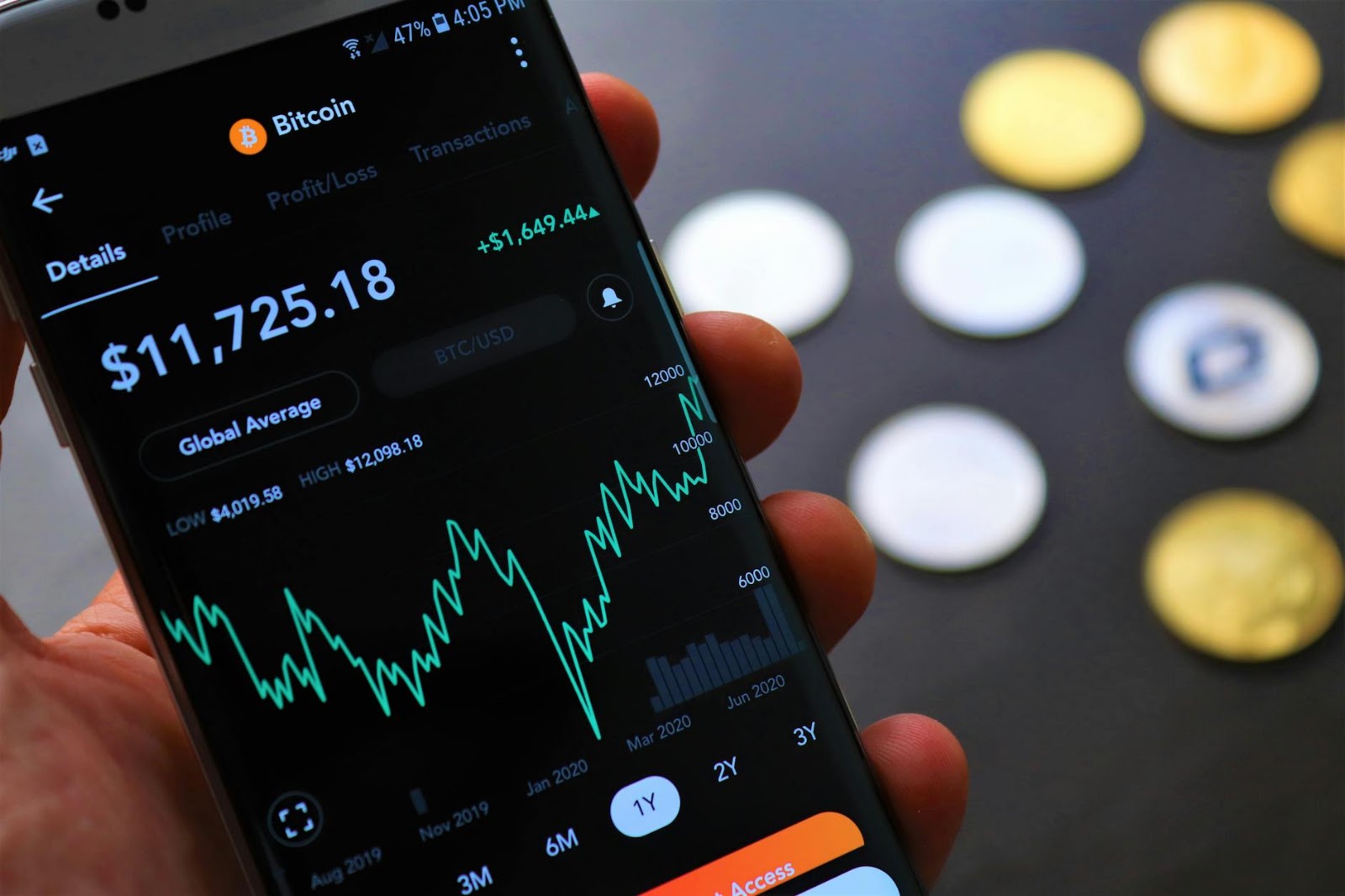 Investor grappling with Bitcoin volatility and the future of crypto price analysis
The Institutional Leviathan: JPMorgan, Fidelity, and the Great BTC Unfolding
The entry of institutional behemoths like JPMorgan and Fidelity isn't just adding liquidity; it's fundamentally reshaping the market's very architecture. Their strategic analyses and price targets—often far more conservative yet incredibly influential—introduce a new layer of complexity. JPMorgan's long-term BTC targets aren't based on Fibonacci retracements; they're rooted in macroeconomic models, institutional adoption rates, and comparisons to gold as a store of value. This means the 'four-year cycle' often touted by maximalists might not just be broken; it could be completely irrelevant in a market driven by trillion-dollar asset managers.
Their presence injects a level of professionalism, regulatory scrutiny, and, frankly, manipulative sophistication that was absent in crypto's earlier wild west days. While retail investors debate technical breakouts, institutions are executing complex derivatives strategies, utilizing dark pools, and lobbying governments to shape the very rules of engagement. Understanding their motivations, their projected price targets, and their impact on market structure is paramount. Ignoring them is akin to trying to predict the weather by looking only at your backyard thermometer when a hurricane is forming offshore.
The 2026 Dilemma: Navigating Bull Traps and Unseen Catalysts
Amidst the bearish sentiment that often follows a significant correction, the question looms large: What is to stop BTC from making another run at all-time highs in 2026? The potential is undeniably there. However, the path forward is riddled with new types of bull traps and unforeseen catalysts. The market's short-term bias might be 'slightly bearish' one day, only to reverse violently on a single macroeconomic data release or a geopolitical flashpoint.
New risks abound: unexpected interest rate hikes from global central banks, tightening regulatory frameworks (especially in the US and EU), and the ever-present specter of global economic instability. These aren't just background noise; they are active drivers of volatility. A sudden shift in the U.S. Strategic Reserve policy or an unforeseen regulatory ruling can wipe out billions in minutes. The 2026 dilemma isn’t about if Bitcoin can reach new ATHs, but how you navigate the treacherous, unpredictable terrain to get there without being liquidated along the way. Your analytical framework needs to be agile, adaptive, and predictive, not merely reactive.
Mastering the Algorithmic Edge: AI, Machine Learning, and the Future Analyst
The future crypto analyst won't be a person hunched over multiple screens, drawing trend lines. They will be an architect of algorithms, a manager of models, and a synthesizer of data streams. Artificial Intelligence and Machine Learning are no longer theoretical concepts; they are the operational backbone of cutting-edge crypto price analysis. These technologies can process and identify patterns in petabytes of data—encompassing on-chain transactions, global news feeds, social media sentiment, macroeconomic indicators, and even obscure derivatives markets—at speeds and scales impossible for humans.
Think about the power of news headline analysis, as explored in academic research. Now, imagine that scaled up, not just identifying keywords, but understanding context, sentiment, and the potential impact of a headline across a thousand different asset classes, all in real-time. AI can detect subtle anomalies, identify nascent trends before they become obvious, and even predict the cascading effects of a major event across interconnected protocols. The competitive edge belongs to those who leverage AI to create predictive models that learn, adapt, and refine their forecasts continuously. The future analyst's primary role will be to ask the right questions and interpret the answers provided by their intelligent systems.
 Successful financial analyst using advanced tools for crypto price analysis
Your New Playbook: Actionable Strategies for 2026 and Beyond
To survive and thrive in the volatile, unpredictable crypto markets of 2026 and beyond, your playbook must fundamentally shift from reactive observation to proactive, multi-faceted analysis. Here’s how you adapt:
- Integrate On-Chain Mastery: Go beyond surface-level metrics. Understand the why behind significant wallet movements, exchange flows, and miner behavior. Tools like Glassnode or Santiment are no longer optional; they are essential.
- Embrace Algorithmic Sentiment: Invest in platforms or develop strategies that leverage AI for advanced sentiment analysis, scanning news, social media, and even geopolitical developments for early indicators of market shifts.
- Monitor Institutional Flows: Track ETF inflows/outflows, institutional reports (JPMorgan, Fidelity), and major venture capital investments. These players move mountains, and their activity provides critical context.
- Macro-Economic Awareness: Understand how interest rates, inflation, central bank policies, and global political stability directly impact crypto. Bitcoin isn't an island; it's deeply interwoven with the global financial fabric.
- Adaptive Risk Management: Volatility is the new normal. Implement dynamic stop-losses, diversify intelligently, and never over-leverage. Capital preservation is paramount when the landscape can change in an instant.
The days of simple 'buy the dip' or 'HODL' based on rudimentary charts are fading. The future of crypto price analysis demands a sophisticated, data-driven, and technologically-augmented approach. Those who cling to outdated methods will find their portfolios decimated by the relentless evolution of the market. The time to upgrade your analytical arsenal isn't coming—it's already here. Adapt, or be swept away by the coming wave of algorithmic dominance. The choice, and your financial future, is entirely in your hands.
```