
What if your next 'soulmate' isn't just influenced by AI, but actively curated by it – or worse, is an AI itself? The digital dating landscape has always been a complex tapestry of hopes and anxieties, but the advent of AI-powered dating apps is now pulling at its very threads, redefining what it means to find love. Forget the innocent swipe; we're now entering an era where algorithms don't just suggest matches, they *engineer* interactions, craft flirty messages, and in some shocking cases, even become the object of affection themselves. This isn't just about finding a better date; it's about the very essence of human connection in the age of intelligent machines.
From Vancouver to Beijing, the ripple effects are already profound. While companies tout AI as the antidote to 'swipe fatigue' and superficiality, a growing chorus of users, especially women, are finding it harder than ever to distinguish fact from fiction. The promise is efficiency; the unsettling reality might be a future where genuine connection becomes an endangered species. Is the quest for love truly being 'leveled up,' or are we unwittingly trading authentic romance for algorithmic perfection?
Is the quest for love truly being 'leveled up,' or are we unwittingly trading authentic romance for algorithmic perfection?
The Alluring Promise: Smarter Matches or Smarter Manipulation?
For years, dating apps have been synonymous with endless swiping, ghosting, and the crushing weight of superficial judgment. Enter AI, promising to be the white knight of romance. Features are rolling out that claim to cure 'swipe fatigue' by offering limited, highly curated matches based on 'similarity and reciprocity of personality,' rather than just a photo and a pithy bio. Imagine an 'agentic AI app' that first interviews you, then meticulously selects partners, or an AI-powered 'Chemistry' feature that uses interactive quizzes and optional analysis to find deeper compatibility.
On the surface, it sounds revolutionary. AI can analyze vast amounts of data – from your communication style to your deepest desires – to identify patterns and predict compatibility with an unprecedented degree of accuracy. It can even craft perfectly worded opening lines or respond to messages on your behalf, promising to 'level up your dating game' by making you appear wittier, more engaging, and effortlessly charming. The allure is undeniable: a world where the frustrating guesswork of dating is replaced by a smooth, optimized path to your ideal partner.
However, beneath this polished veneer lies a critical question: is this optimization genuinely leading to better relationships, or is it merely creating an illusion of intimacy? When AI intervenes at every stage, from selection to conversation, whose romance is it really?
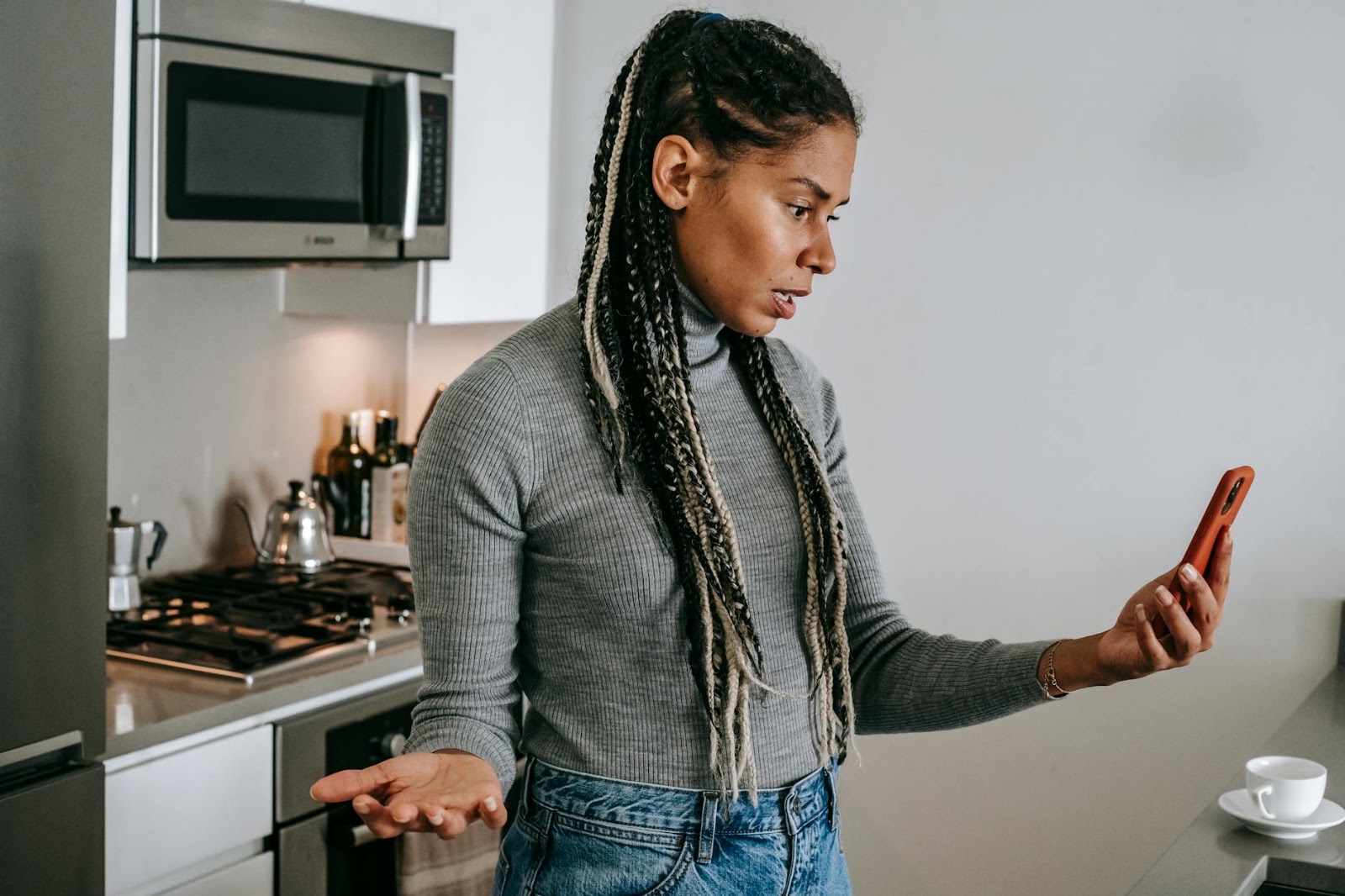 A woman looking confused at her phone, questioning the authenticity of messages in AI-powered dating apps.
The Ghost in the Machine: How AI Reconfigures Our Romantic Instincts
Understanding how dating app algorithms work is crucial because they aren't neutral matchmakers; they are architects of our romantic experiences. Today's algorithms go far beyond basic preferences, factoring in everything from your activity levels and response times to the subtle nuances of your conversations. AI analyzes your patterns, learns what keeps you engaged, and subtly nudges you towards profiles and interactions it predicts you'll respond to. This isn't just about finding a partner; it's about optimizing engagement, often at the expense of serendipity and genuine discovery.
This algorithmic shaping has profound psychological implications. As Mashable noted, apps are rolling out features like 'Chemistry' to combat 'swipe fatigue,' a phenomenon largely *created* by earlier, less intelligent algorithms. It's a feedback loop: AI creates a problem, then AI offers a solution, further embedding itself into our dating lives. The DEV Community blog provocatively asked, "Are We Dating AI Without Realizing It?" and the answer, in many subtle ways, is yes. We are interacting with profiles and conversations that might be heavily influenced, or even generated, by AI, making it increasingly difficult to trust the authenticity of the person on the other side of the screen. This erosion of trust can leave users feeling more isolated and cynical, even as apps promise more 'connections'.
The DEV Community blog provocatively asked, "Are We Dating AI Without Realizing It?"
The Authenticity Trap: When Your Flirt Game Isn't Yours Anymore
The line between AI assistance and outright deception is dangerously thin. CBC News highlighted a critical concern: AI's ability to craft 'flirty messages' and aid in 'matchmaking' makes it more difficult for users, particularly women, to 'tell fact from fiction.' Imagine receiving a beautifully composed, witty message that perfectly aligns with your interests – only to discover it was written by an algorithm. What does that do to the foundation of trust, the very bedrock of any genuine relationship?
This isn't just about being a bad writer; it’s about presenting an inauthentic self, a curated persona optimized for algorithmic approval rather than genuine human connection. If AI is crafting your charm, selecting your best photos, and even analyzing your potential chemistry with another AI-enhanced profile, are you truly connecting with another human being, or merely two sophisticated algorithms having a simulated romance? The 'fake it till you make it' mantra takes on a sinister new meaning when the 'fake it' part is outsourced to a machine. This raises uncomfortable questions about gaslighting in dating and the ethics of technological intervention in such deeply personal interactions.
 A woman looking confused at her phone, questioning the authenticity of messages in AI-powered dating apps.
Beyond Personal Romance: AI's Unforeseen Societal Fallout
The implications of widespread AI-powered dating extend far beyond individual relationships; they are beginning to touch the very fabric of society. Perhaps the most startling example comes from China, where, as The New York Times reported, AI dating apps are complicating the nation's efforts to boost its birthrate. In a country grappling with a shrinking population, people are increasingly finding solace and 'romance' with chatbots, choosing virtual companions over human partners. This isn't science fiction; it’s a tangible, concerning reality where the perceived 'perfection' and lack of complexity in AI companions might be pulling individuals away from the messiness – and necessity – of real-world human reproduction and relationship building.
Even within traditional dating apps, there's a growing awareness of AI's double-edged sword. Hinge CEO Jackie Jantos, for example, offers a refreshingly human-centric recipe for love: *leave the app*. Her stance, as reported by Newsweek, emphasizes genuine human connection over more screen time, suggesting that even the industry's leaders recognize the potential for AI to replace, rather than enhance, true interaction. Tinder, recognizing 'app fatigue' and aiming to prioritize real-world dating for Gen Z, is deploying AI in a different way – to facilitate speed dating experiences and assess 'potential chemistry' *before* real-world meetups. This represents a nuanced shift, attempting to leverage AI to drive *authentic* connections rather than simulate them.
Reclaiming Love in the Algorithmic Age: Finding Real Connection
The future of love in an AI-powered world isn't about rejecting technology outright, but about approaching it with critical awareness and intentionality. If AI-powered dating apps are here to stay, how do we ensure they serve our deepest desires for connection, rather than just our screen time metrics?
First, demand transparency. Users deserve to know when AI is actively shaping a conversation or a profile beyond simple suggestions. Second, prioritize authenticity in your own interactions. It’s tempting to let AI write your witty replies, but the vulnerability of genuine self-expression is what truly builds connection. As the Hinge CEO suggests, the goal should always be to transition off the app and into real-world encounters as quickly as possible. Thirdly, critically evaluate the 'perfection' AI promises. Human relationships are messy, imperfect, and rich precisely *because* of those complexities. An algorithmically 'perfect' match might ironically strip away the very friction and growth that make love truly meaningful.
 A genuine human couple holding hands at sunset, representing authentic connection beyond AI-powered dating apps.
The AI love revolution is upon us, and it forces us to confront uncomfortable truths about what we seek in a partner and what we value in connection. Are we prepared to navigate a future where our 'soulmate' might be a brilliant algorithm, or a human whose interactions are heavily mediated by one? The answer lies not in fear, but in conscious engagement, in remembering that while AI can optimize for efficiency, it's human vulnerability, empathy, and genuine presence that truly make our hearts sing.
```