
A month ago, the Dow soared past 50,000 for the first time, a historic milestone that felt almost surreal. Yet, just days before, a brutal selloff hammered tech and AI stocks, briefly pushing the S&P 500 into negative territory for the year. This stark contradiction begs a crucial question: How could AI, the supposed brain of modern finance, seemingly miss such seismic shifts? The narrative of AI transforming market analysis clashes head-on with the raw, unpredictable realities of the market, leaving investors and analysts alike asking: Is AI a prophet or just another purveyor of hype in the complex world of price analysis?
Is AI a prophet or just another purveyor of hype in the complex world of price analysis?
For years, we've been bombarded with promises of artificial intelligence as the ultimate crystal ball for financial markets. Algorithms crunching petabytes of data, predicting every tremor and surge with uncanny precision. Yet, when the market throws a curveball—a sudden geopolitical event, an unexpected earnings report, or a sector-wide correction—AI models often appear as bewildered as their human counterparts. Is the hype truly outstripping the practical applications, or are we simply misinterpreting what AI is truly capable of when it comes to predicting market movements?
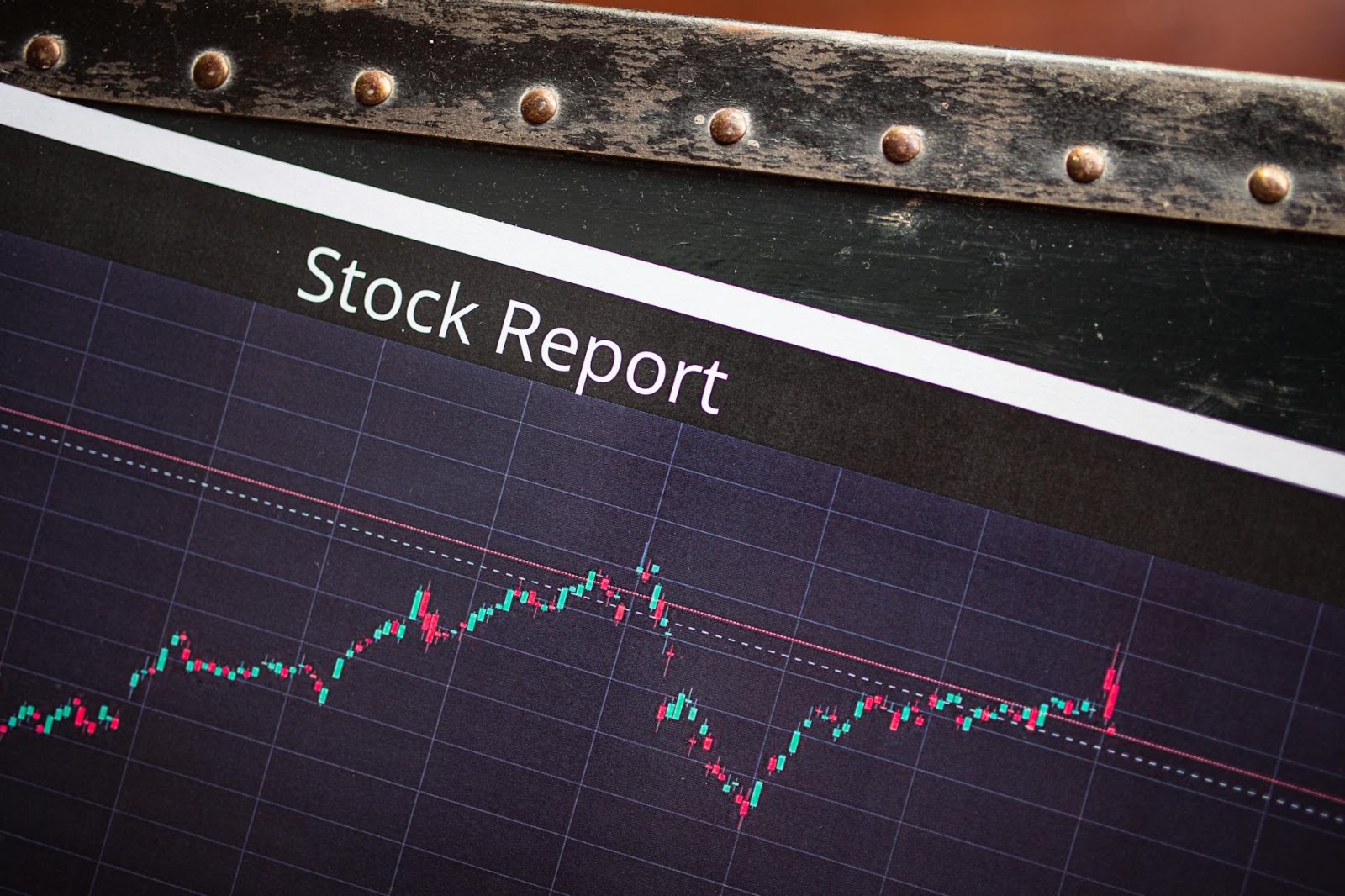 A human investor looking puzzled at confusing abstract market data, representing the limitations of AI price analysis in unpredictable markets.
The Promise vs. The Plunge: Decoding AI's Market Paradox
Walk through any financial district, and you'll hear the buzz: AI is everywhere, transforming everything from high-frequency trading to long-term portfolio management. Firms boast about their AI-driven insights, their sophisticated models capable of spotting patterns invisible to the human eye. We read headlines about AI processing vast oceans of data, simultaneously analyzing price movements, liquidity shifts, on-chain activity, macro indicators, regulatory developments, and even behavioral sentiment. It paints a picture of an all-seeing, all-knowing financial deity.
Yet, this optimistic narrative often collides with stark realities. Consider the significant software selloff that made headlines a few weeks prior to the Dow's historic run. Major tech and AI companies shed billions in valuation. If AI is so adept at market analysis, why did these models seem 'unaware' of the brewing storm, as some critics provocatively suggested? This isn't just about missing a single event; it's about the fundamental challenge of AI truly understanding the nuanced, often irrational forces that drive markets. The disconnect between what AI can do and what investors expect it to do lies at the heart of the great AI price analysis debate.
The disconnect between what AI can do and what investors expect it to do lies at the heart of the great AI price analysis debate.
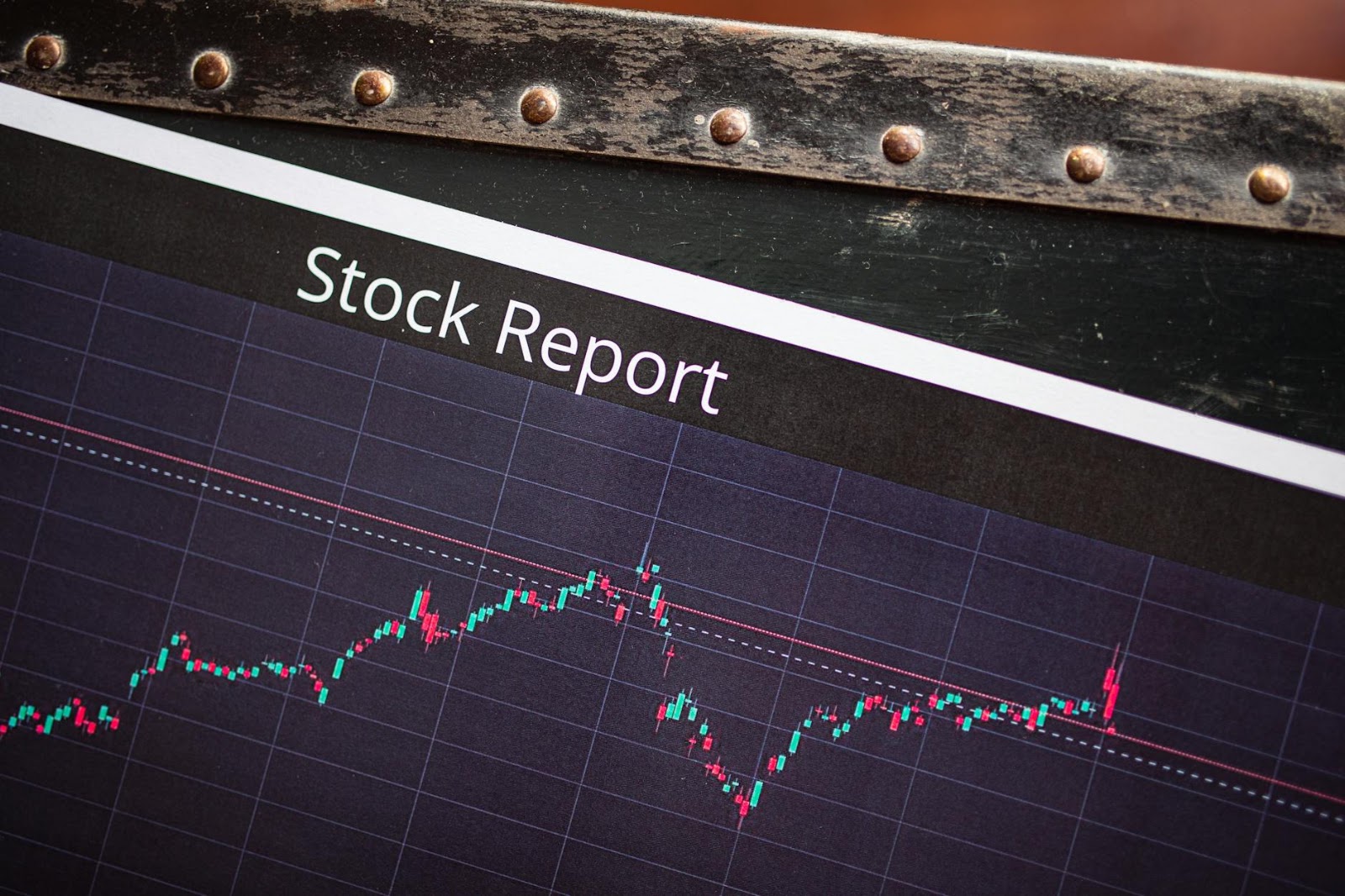 A human investor looking puzzled at confusing abstract market data, representing the limitations of AI price analysis in unpredictable markets.
Beyond the Buzzwords: Where AI Actually Excels in Price Analysis
To dismiss AI entirely from the realm of market analysis would be a grave mistake. While it may not be a flawless oracle, AI's practical applications are undeniably powerful and are already revolutionizing specific facets of finance. Where does AI truly shine in price analysis? It's in its unparalleled ability to process and identify complex patterns within massive, diverse datasets far beyond human capacity.
Think about the sheer volume of information that influences market prices: millions of news articles, social media feeds, earnings reports, economic indicators, central bank statements, and historical trading data. AI, particularly advanced machine learning and deep learning models, can ingest, categorize, and cross-reference this data at lightning speed. It excels at:
- High-Frequency Trading (HFT): Identifying micro-trends and executing trades in milliseconds, capitalizing on tiny price discrepancies.
- Sentiment Analysis: Sifting through endless text to gauge market mood, identifying potential shifts before they become obvious.
- Risk Management: Detecting anomalies and potential risks in portfolios, flagging correlations that human analysts might miss.
- Algorithmic Arbitrage: Exploiting minor price differences across multiple exchanges or related assets.
- Quantitative Research: Discovering novel alpha-generating strategies by uncovering hidden relationships within financial data.
These are not minor improvements; they are foundational shifts. AI provides the computational horsepower to turn raw, unstructured data into actionable insights, making processes more efficient and uncovering opportunities that simply didn't exist before. This is the 'masterstroke' aspect of AI price analysis – not predicting the unpredictable, but mastering the predictable patterns within immense chaos.
The Blind Spots: Why AI Isn't Your Financial Oracle (Yet)
Despite its undeniable strengths, AI in market analysis comes with significant limitations, often obscured by the very hype that surrounds it. The core issue isn't that AI is 'bad' at analysis; it's that markets are profoundly human and inherently chaotic in ways that defy pure algorithmic logic.
- Black Swan Events: AI struggles with truly unprecedented events—global pandemics, sudden geopolitical conflicts, or regulatory shocks—because it learns from historical data. If there's no historical precedent, AI has no framework to 'understand' or predict its impact.
- The Human Element: Markets are driven by fear, greed, irrational exuberance, and panic. While AI can analyze behavioral sentiment, it doesn't feel these emotions. It can't grasp the nuanced implications of human psychology that often override logical economic indicators.
- Garbage In, Garbage Out: The quality of AI's output is directly tied to the quality and relevance of its input data. Biased, incomplete, or incorrectly weighted data will lead to flawed analysis and poor predictions.
- Lack of Causal Understanding: AI can identify correlations with incredible accuracy, but it doesn't inherently understand causation. It can tell you that X and Y often move together, but it can't tell you why, or if X truly causes Y, or if both are caused by Z. This is critical for strategic decision-making.
- Adaptive Markets: The moment an AI strategy becomes widely known and adopted, the market adapts, and the edge disappears. AI's own success can lead to its obsolescence, requiring constant innovation that current models struggle to self-generate.
These blind spots highlight that AI is a powerful tool for pattern recognition and data processing, but it lacks the contextual understanding, common sense reasoning, and adaptability of human intelligence—especially when faced with novel situations.
Crypto's Wild Ride: A Litmus Test for AI Price Analysis
The volatile world of cryptocurrencies offers a fascinating, real-time laboratory for testing the limits and capabilities of AI price analysis. Recent crypto market rebounds, with Bitcoin, Ethereum, XRP, and ADA seeing significant gains, are attributed to a complex interplay of 'macro correlation, ETF inflows, and growing derivatives positioning data.' Can AI truly predict these multi-factor shifts, or does it merely react to them?
AI's strength here lies in its ability to process the unique blend of traditional financial indicators with novel on-chain data specific to crypto. It can track whale movements, exchange flows, network activity, and correlate them with broader market trends and news sentiment. For instance, an AI might detect a surge in institutional ETF inflows, combined with positive social media sentiment, and flag it as a bullish signal for BTC.
However, even in crypto, the human element reigns supreme during periods of extreme volatility. A tweet from an influential figure, a sudden regulatory rumor, or a widespread panic sell-off can instantly override months of algorithmic predictions. AI models might identify the signal that a rally is occurring, but do they understand the underlying human psychology and the often-irrational exuberance or fear that fuels such movements? The truth is, AI is excellent at finding patterns *after* they begin to form, but predicting the initial spark of an unpredictable sentiment shift remains largely outside its grasp. It's a powerful analyst, but not yet a reliable prophet.
AI is excellent at finding patterns *after* they begin to form, but predicting the initial spark of an unpredictable sentiment shift remains largely outside its grasp.
 Human and robot arms collaborating over a financial dashboard, symbolizing augmented intelligence in AI price analysis.
The Unsung Heroes: Human Intuition and the Augmented Investor
The enduring takeaway from the AI price analysis debate is not about AI replacing human expertise, but rather augmenting it. The most successful financial strategies of the future won't be purely AI-driven or purely human-driven; they will be a synergistic blend of both.
Human analysts bring invaluable qualities to the table: intuition, contextual understanding, ethical judgment, and the ability to interpret nuance that algorithms simply cannot. They can weigh the impact of an unexpected policy change, understand the ripple effects of a global crisis, or critically evaluate the biases within the data that an AI is processing. They provide the 'why' behind the 'what' that AI delivers.
The future belongs to the 'augmented investor'—individuals and teams who leverage AI's computational prowess to handle the heavy lifting of data analysis, pattern recognition, and initial signal generation. They then apply their own strategic insight, experience, and critical thinking to interpret those signals, validate their accuracy, and make informed, adaptive decisions. AI becomes a force multiplier, not a replacement. It empowers us to see further, process faster, and react smarter, but the ultimate judgment and the strategic vision still rest firmly with human intelligence.
AI becomes a force multiplier, not a replacement. It empowers us to see further, process faster, and react smarter, but the ultimate judgment and the strategic vision still rest firmly with human intelligence.
In essence, AI price analysis isn't about eliminating human involvement; it's about elevating it. It allows us to focus on the higher-order thinking, the big picture, and the truly unpredictable elements that will always define the dynamic, human-driven world of financial markets. The debate between practical and hyped AI applications will continue, but the clear path forward is one of intelligent collaboration.
```