
The internet is ablaze with AI hype. Daily headlines scream about algorithms poised to predict stock market crashes, optimize every decision, and even write blockbuster novels. We're told AI is on the verge of becoming an omniscient oracle, whispering future market movements into our ears. But here’s a blunt truth nobody wants to tell you: for all its dazzling potential, AI is surprisingly fallible when it comes to the chaotic, human-driven world of stock market analysis – at least, not yet. While the talking heads debate AI's crystal ball abilities, a quiet revolution is unfolding where AI's true, tangible value is being demonstrated, monetized, and reshaping industries from the ground up. This isn't about predicting tomorrow's headlines; it's about building tomorrow's infrastructure, piece by painstaking piece, and understanding how that value is actually priced.
For all its dazzling potential, AI is surprisingly fallible when it comes to the chaotic, human-driven world of stock market analysis – at least, not yet.
Beyond the Crystal Ball: Why AI Isn't Your Next Stock Oracle (Yet)
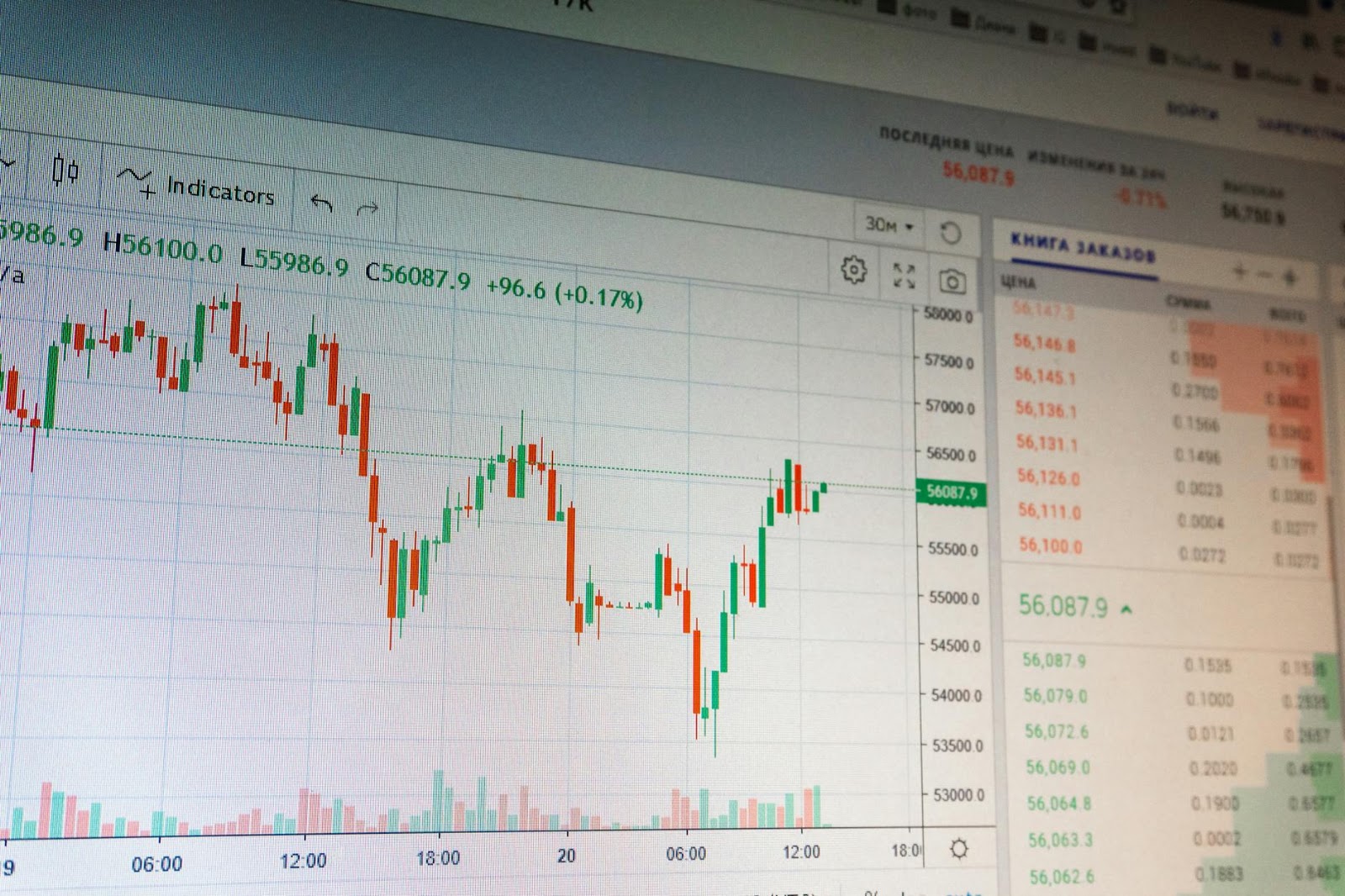
It’s a common fantasy: an AI system that perfectly forecasts market swings, allowing you to buy low and sell high with unerring accuracy. Yet, reality often serves a dose of humble pie. Morningstar recently highlighted a jarring truth: while software selloffs sent shockwaves through global markets, many AI models remained blissfully unaware, failing to integrate these significant macroeconomic events into their predictions. This isn't a flaw in AI itself, but a profound limitation of current models in grappling with the sheer complexity and unpredictability of global financial markets.
Why does AI, so powerful in other domains, stumble here? Financial markets are not merely complex algorithms; they are intricate tapestries woven from human psychology, geopolitical shifts, regulatory changes, and countless black swan events. AI excels at pattern recognition within structured, historical data. But market data is often unstructured, incredibly noisy, and its context is in constant, dynamic flux. An event that caused a crash last year might have no bearing on a similar event tomorrow due to shifting global sentiment or new policy. AI struggles with 'common sense' reasoning, understanding causality in a non-linear system, and adapting to entirely novel situations – precisely what market prediction demands. This isn't a failure of AI's promise, but a crucial distinction between what AI *can* do now and what AI *might* do someday. It's a powerful tool, not a deity.
The Quiet Revolution: Where Practical AI Truly Excels (and Generates Billions)
While some chase the elusive dream of an AI market seer, others are quietly building empires on practical, high-value AI applications. These aren't the AI projects that grab sensational headlines, but they are the ones delivering measurable ROI, solving concrete business problems, and driving multi-billion-dollar market growth. Forget the hype about general artificial intelligence; the real money is being made in specialized artificial intelligence.
Take, for instance, the AI-powered contract analysis software market. This isn't headline-grabbing stuff, but it's projected to explode to a staggering USD 18 billion by 2035, growing at a robust compound annual growth rate (CAGR) of 24%. Why such phenomenal growth? Because AI excels at tasks that are repetitive, data-intensive, and prone to human error, yet carry enormous financial and legal stakes. AI can parse dense legal documents in seconds, identify critical clauses, flag potential risks, ensure compliance with regulatory frameworks, and even extract specific data points with unparalleled accuracy and speed. It automates what once took armies of lawyers and paralegals countless hours, freeing up human experts for higher-level strategic work and dramatically reducing operational costs.
This isn't about magical predictions; it's about meticulous, practical application. From medical diagnostics where AI assists in identifying anomalies in scans, to optimizing complex supply chains, to personalizing educational pathways, to detecting fraud in real-time – these are the arenas where AI is delivering undeniable, quantifiable value. These applications deal with defined datasets, clear objectives, and measurable outcomes. They transform inefficient processes into hyper-efficient ones, and that, fundamentally, is where the billions are being made. It's the difference between speculative wonder and hard-nosed engineering.
 Hand arranging gears with dollar signs and upward trending arrows, symbolizing strategic AI software monetization and sophisticated AI applications price analysis models.
Unmasking Value: The Strategic Art of AI Pricing Models
If practical AI solutions are generating such immense value, the natural question becomes: how do companies capture that value? The answer isn't simple. Monetizing AI isn't a one-size-fits-all problem; it's a strategic art form that directly impacts market adoption and profitability. As Oboe.com astutely highlights, "picking a pricing model isn't just about how you bill customers; it's about aligning your product's value with its cost." This alignment is crucial for demonstrating ROI and ensuring long-term customer satisfaction in the realm of AI applications price analysis.
"Picking a pricing model isn't just about how you bill customers; it's about aligning your product's value with its cost."
Consider the various models emerging in the AI software landscape:
- Subscription/Tiered Models: The ubiquitous SaaS model, offering predictable revenue for vendors and consistent access for users. While simple, it can sometimes decouple cost from actual usage or value delivered.
- Usage/Consumption-based Models: This is gaining significant traction, especially for specific AI services. Customers pay per API call, per document processed, per inference, or per unit of data analyzed. This model directly links cost to the value received, making it incredibly transparent and fair. For AI-powered contract analysis, paying per document reviewed makes perfect sense.
- Outcome-based Models: The most ambitious and potentially rewarding model. Here, the vendor's payment is tied to the measurable business outcome achieved for the customer (e.g., a percentage of cost savings, increased revenue, or reduced errors). This requires deep integration and trust but offers the ultimate value alignment, as the vendor only profits when the customer truly benefits.
- Value-based Models: Similar to outcome-based but often focused on the *perceived* or *demonstrated* economic benefit. Pricing might be set based on the estimated ROI for the customer, requiring a strong value proposition and clear communication.
The shift towards consumption and outcome-based models reflects a maturing market where customers are increasingly savvy. They demand to see a direct correlation between their investment in AI and the tangible results it delivers. This isn't just about technical prowess; it's about smart business strategy, ensuring that the incredible utility of AI is priced in a way that is fair, transparent, and ultimately, sustainable for both vendor and client.
 Hand arranging gears with dollar signs and upward trending arrows, symbolizing strategic AI software monetization and sophisticated AI applications price analysis models.
The Future is Priced In: Separating Signal from Noise in AI Investments
For investors and businesses looking to navigate the complex AI landscape, understanding the distinction between hype and practical application, and then analyzing the associated pricing strategies, is paramount. Schwab's daily market updates remind us that staying informed about macroeconomic reports and company earnings is vital, but in the AI sphere, it's about looking beyond the surface-level buzz.
To discern genuine opportunity from overinflated promise, focus on companies that are not just *developing* AI, but deploying it in ways that solve concrete, expensive problems. Ask critical questions: Does their AI solution address a clear market need? Is the value proposition easily quantifiable? And crucially, how are they pricing their service? Do their pricing models align with the value they provide, ensuring long-term customer adoption and a clear path to profitability?
The long-term winners in the AI race won't be those with the flashiest, most generalized demos, but those solving specific, real-world problems with robust, scalable, and appropriately priced AI solutions. The fears of an 'AI bubble' often stem from unrealistic expectations of general AI's immediate capabilities, not from the concrete, incremental progress of specialized AI. The true economic potential of AI isn't in some distant, science-fiction future; it's being built and priced right now, in the mundane yet transformative applications that are quietly reshaping industries around the globe.
Understanding the nuanced interplay between AI’s practical capabilities, its strategic monetization, and its real-world impact is the key to unlocking its undeniable economic power. The future of AI value is being built in spreadsheets, legal offices, and manufacturing plants, not just in hyperbolic headlines. It's time to look past the predictions and focus on the profits.
 Abstract glowing AI brain contrasted with concrete data analysis charts, illustrating the gap between AI hype and practical AI applications price analysis.