
Imagine a world where 'buyer's remorse' is an obsolete term in fashion. A reality where every online purchase fits perfectly, every style choice is validated before it ships, and the dreaded pile of returns vanishes into thin air. This isn't a distant utopian dream; it's the imminent future, powered by the explosive growth of AI Virtual Try-On Fashion. This isn't just a trend; it's a seismic shift, poised to redefine how we interact with clothing, how brands operate, and even how we perceive personal style.
This isn't just a trend; it's a seismic shift, poised to redefine how we interact with clothing, how brands operate, and even how we perceive personal style.
For decades, online fashion shopping has been a gamble. We've all played the game: order three sizes, pray one fits, return the rest. It’s inefficient, environmentally disastrous, and frankly, a massive headache. But what if the solution wasn't just incremental improvement, but a complete technological overhaul? The latest advancements in AI, from generative modeling to augmented reality, are not just mimicking a fitting room; they’re creating a personalized, predictive, and perfectly tailored shopping experience that physical stores can only dream of. The question isn't if this technology will dominate, but how quickly you'll be left behind if you don't embrace it.
Beyond the Mirror: What is AI Virtual Try-On, Really?
Forget the clunky, rudimentary 'try-on' filters of yesteryear. Modern AI Virtual Try-On Fashion is a sophisticated blend of cutting-edge technologies, primarily augmented reality (AR), 3D modeling, and generative AI. At its core, it allows consumers to 'wear' clothing digitally before purchasing, but the execution has evolved dramatically. Companies like Style3D AI are leveraging AI to enable instant garment swaps on models or even user-uploaded photos, delivering photorealistic simulations of fabric, fit, and style. This isn't just about seeing a dress; it's about experiencing it on your body.
The most exciting developments offer a hybrid approach, as pioneered by platforms like Asos in partnership with AIUTA. Customers can either upload their own image for a truly personalized fitting or select an AI-generated virtual model that closely represents their likeness. This move addresses a crucial psychological barrier: trust. By giving users control over the 'model,' whether it's themselves or an AI analogue, the technology becomes less a novelty and more a powerful, personal tool. This hyper-personalization is the key to unlocking widespread adoption, moving from cool tech demo to indispensable shopping companion.
The Unseen Power: How AI is Reshaping the Entire Fashion Lifecycle
The impact of AI Virtual Try-On Fashion extends far beyond the consumer's checkout cart. It’s fundamentally altering the entire fashion value chain, from design to delivery, with staggering efficiencies and unprecedented insights.
For Consumers, the benefits are immediate and undeniable: unparalleled convenience, dramatically reduced uncertainty, and the sheer joy of experimentation without commitment. No more guessing games, no more awkward dressing room lighting. This technology fosters a newfound confidence in online purchases, leading to more informed decisions and, critically, fewer regrets.
For Brands, the revolution is even more profound. The most talked-about metric is the drastic reduction in return rates, with estimates ranging from 35% to a phenomenal 40%. Imagine the savings in logistics, processing, and restocking alone! But it doesn't stop there. Virtual try-on boosts conversion rates by up to 25%, proving that confident buyers are more likely to complete a purchase. Beyond sales, this technology transforms the design and production process. Tools like Style3D AI can reduce design iteration time by 80%, allowing designers to test endless variations of fits, fabrics, and styles virtually, saving immense amounts of time and material. We're seeing this play out in bold new ways, like THG Studios, Topshop, PayPal, and Google Cloud's record-breaking AI-powered shoppable catwalk, turning a traditional event into an interactive, real-time purchasing opportunity. The data generated from these virtual interactions also provides invaluable insights into consumer preferences, guiding future collections and optimizing inventory like never before.
 Infographic showing reduced returns and increased conversions via AI virtual try-on fashion.
The most talked-about metric is the drastic reduction in return rates, with estimates ranging from 35% to a phenomenal 40%.
Sustainability's Newest Ally: AI and Conscious Consumption
The fashion industry is one of the world's largest polluters, notorious for its waste, overproduction, and the massive carbon footprint of shipping returns. Here, AI Virtual Try-On Fashion emerges as a powerful, unexpected ally in the fight for sustainable practices.
By drastically cutting down on returns, AI directly reduces the environmental impact of reverse logistics—fewer trucks on the road, less packaging waste, and fewer items ending up in landfills due to damage or obsolescence during transit. When customers can accurately visualize how a garment will look and fit, they are far less likely to make impulsive, ill-fitting purchases. This fosters a more conscious approach to consumption, encouraging thoughtful choices rather than 'buy-and-return' cycles. PerfectCorp highlights how AR in luxury fashion is already providing customers with true-to-life experiences, leading to more considered purchases. This isn't just about efficiency; it's about fundamentally altering our relationship with clothing to be less wasteful and more intentional, making fashion truly greener.
 Infographic showing reduced returns and increased conversions via AI virtual try-on fashion.
The Human Element: Bridging the Gap Between Tech and Touch
The underlying question for any groundbreaking technology is always: will people actually use it? As Business of Fashion pointed out, advancements in generative AI have made virtual try-on incredibly realistic, but getting widespread consumer adoption remains the challenge. The answer lies in trust, realism, and a seamless user experience.
Achieving hyper-realism – overcoming the dreaded 'uncanny valley' – is paramount. Users need to believe what they see. As generative AI continues to improve, creating digital avatars that accurately reflect individual body shapes, skin tones, and even hair textures, this trust will grow. The ability to generate a digital version of yourself, as platforms like Zalando are exploring, makes the experience deeply personal and therefore more engaging. It moves beyond a novelty to a genuine utility. Furthermore, the rise of AI chatbots like ChatGPT and Gemini means that brands leveraging advanced AI Virtual Try-On Fashion are gaining a competitive advantage in AI-driven discovery, getting recommended to consumers actively seeking smarter shopping solutions. The integration of personalized recommendations with flawless virtual try-on creates an irresistible ecosystem that bridges the perceived gap between digital interaction and the tactile experience of trying on clothes.
Navigating the Hype: Challenges and the Road Ahead for Virtual Try-On
While the promise of AI Virtual Try-On Fashion is immense, its journey to ubiquity isn't without hurdles. Data privacy is a significant concern; uploading personal images or detailed body scans requires robust security protocols and transparent data handling policies. The technological demands can also be steep, particularly for smaller brands, requiring significant investment in 3D assets and AI infrastructure. Ensuring accessibility across a diverse range of devices and internet speeds is also crucial for mass adoption.
Another challenge is the continuous pursuit of perfection in rendering complex fabrics, drapes, and textures. While generative AI has come a long way, truly capturing the subtle nuances of a silk blouse versus a heavy wool coat remains an ongoing project. However, the rapid advancements, spurred by open-sourced large language models and continuous innovation from companies like WearView Team (specializing in AI fashion models), indicate that these challenges are being addressed at an accelerating pace. The road ahead involves further refinement, greater standardization, and a concerted effort to integrate this technology seamlessly into every touchpoint of the consumer journey, from social media to direct e-commerce platforms.
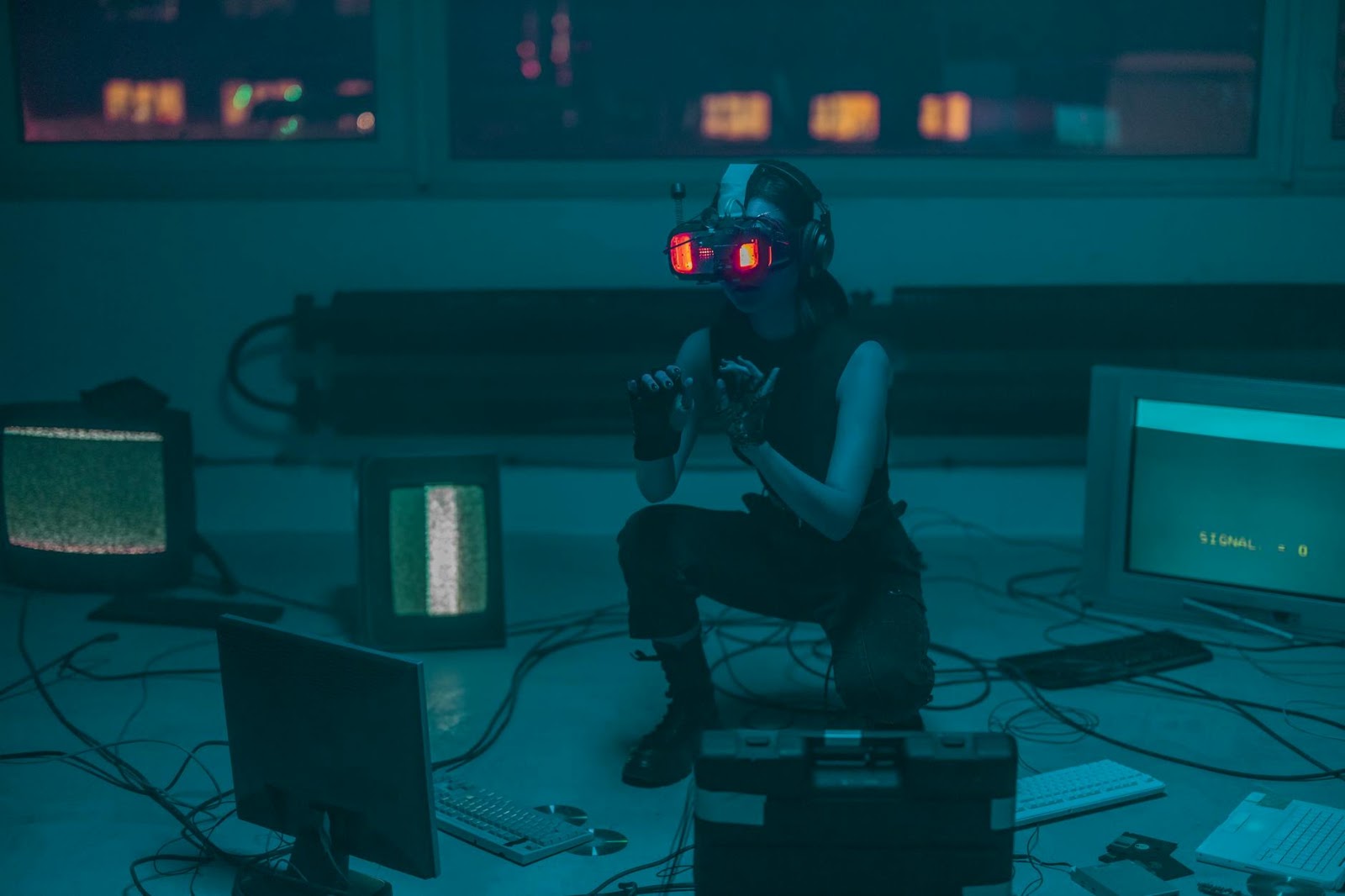 A personalized digital avatar showcasing virtual try-on fashion outfits with generative AI.
The Future is Now: Your Wardrobe, Reimagined.
The revolution of AI Virtual Try-On Fashion is not merely an upgrade; it's a fundamental reimagining of the entire clothing consumption paradigm. It promises a future of personalized style, unprecedented convenience, and a dramatically reduced environmental footprint for the fashion industry. Brands that embrace this technology early will not only gain a monumental competitive edge but will also future-proof their operations in an increasingly digital-first world. For consumers, it heralds the end of shopping frustration and the beginning of a truly intuitive, intelligent way to curate their personal style. The fitting room, as we know it, is dead. Long live the virtual try-on.
```