
Imagine this: You're scrolling through an online store, eyes darting across a stunning dress. You click 'add to cart,' but a tiny voice of doubt whispers: "Will it actually fit? Will it look good on me?"
That doubt, that inherent friction of online fashion, has plagued shoppers and retailers for decades, leading to a staggering 20-30% return rate for online apparel.
But what if that era of uncertainty is ending? What if a technology exists right now that lets you "try on" clothes from the comfort of your couch, with hyper-realistic accuracy, before you even consider buying?
 Digital avatars and models in a futuristic generative AI fashion design studio for virtual try-on.
Enter the revolution: AI virtual try-on. This isn't just a gimmick; it's a paradigm shift, powered by advanced artificial intelligence and augmented reality, poised to dismantle the old guard of fashion retail and reshape our relationship with clothing forever. The question isn't if it's coming, but how quickly you'll embrace it.
The Digital Revolution You Can Wear: What is AI Virtual Try-On?
At its core, AI virtual try-on (VTO) allows consumers to digitally visualize how garments will look on their own bodies, or on customizable digital avatars, without needing to physically interact with the clothes. This isn't a new concept, but the recent leaps in AI, especially generative AI, have transformed it from clunky filters into an almost indistinguishable reality.
Companies like Google have recently unveiled features where a simple selfie is enough to generate a full-body digital twin, allowing you to try on clothes virtually with unprecedented ease.
Retailers like Goddiva are rapidly integrating these experiences, promising to help customers "understand how they will look and feel in a dress before making a purchase." This is where the magic happens: a blend of computer vision, 3D rendering, and sophisticated AI algorithms that accurately map fabric textures, drapes, and fit onto your unique body shape. No more guessing, no more hoping for the best.
Beyond the Hype: The Tangible Impact on Shoppers and Brands
The implications of robust AI virtual try-on extend far beyond mere novelty. For shoppers, the benefits are clear and compelling:
- Unparalleled Confidence: The single biggest barrier to online fashion purchasing is fit uncertainty. VTO dissolves this, empowering shoppers to make informed decisions with a high degree of confidence. You see it, you virtually wear it, you buy it with assurance.
- Time-Saving Convenience: Skip the changing rooms, the queues, the hassle. Try on dozens of outfits in minutes, from anywhere with an internet connection.
- Enhanced Discovery: Experiment with styles, colors, and cuts you might never consider in a physical store, expanding your fashion horizons risk-free.
For brands, the impact is equally transformative, directly hitting their bottom line and operational efficiency:
Studies, like those cited by Style3D AI, show VTO can increase conversion rates by up to 30%. When shoppers are confident, they buy more.
- Drastically Reduced Returns: Fewer fit-related doubts mean fewer returns, slashing logistical costs, environmental waste, and improving customer satisfaction. This is a game-changer for sustainability efforts.
- Optimized Workflows & Design: Platforms like Style3D AI are not just for consumers. They enable designers to transform sketches into realistic 3D designs instantly, creating prototypes without physical production, dramatically reducing costs and waste in the design phase.
- Competitive Edge: Early adopters are already positioning themselves as innovators, attracting a tech-savvy generation eager for frictionless shopping experiences.
The Generative AI Leap: From Basic Filters to Hyper-Realism
What truly differentiates the current wave of AI virtual try-on is the integration of generative AI. The ability of models like Google’s Veo 3 or OpenAI’s Sora 2 (as highlighted by Vogue’s 2025 fashion tech review) to create hyper-realistic images and videos has revolutionized the digital fashion landscape. This means that instead of simply overlaying a 2D image of clothing onto a person, generative AI can predict how fabric will realistically fold, shadow, and move with your body.
This technology is so advanced that companies like Claid.ai are leveraging it to create 'AI Photoshoots,' generating on-model product photos without the need for expensive physical photoshoots. This not only democratizes access to high-quality visuals for smaller brands but also accelerates time-to-market for new collections. The days of struggling to imagine how a dress will look on an off-model mannequin are quickly fading.
 Digital avatars and models in a futuristic generative AI fashion design studio for virtual try-on.
The Unseen Challenges: Why Isn't Everyone Using It Already?
Despite the undeniable potential, the question raised by Business of Fashion – "Will Shoppers Use It?" – remains a crucial one. Widespread adoption isn't just about technological capability; it's about trust, habit, and overcoming psychological barriers.
- The Uncanny Valley: While realism has improved dramatically, there can still be moments where the digital rendering feels slightly 'off,' creating a sense of unease. As the technology refines, this gap will close.
- Data Privacy Concerns: Uploading personal photos, even just selfies, can raise privacy questions for some users. Clear communication and robust data security protocols are paramount for building trust.
- Accuracy and Consistency: Shoppers need to be confident that what they see virtually is truly representative of the physical garment. Any discrepancies will undermine trust and slow adoption.
- User Experience Integration: For VTO to become ubiquitous, it needs to be seamlessly integrated into existing shopping platforms, easy to use, and offer a tangible benefit that outweighs any perceived effort.
Who's Leading the Charge? Innovators Shaping Your Wardrobe's Future
Several key players are pushing the boundaries of AI virtual try-on:
- Google: With their "AI Mode" shopping features and the ability to use a selfie for VTO, Google is democratizing access and making it incredibly user-friendly for a massive audience.
- Style3D AI: Beyond consumer-facing VTO, Style3D AI is empowering the entire fashion value chain, from design to production, with their advanced AI and AR tools for 3D garment creation and realistic simulations.
- Goddiva: An early adopter in the retail space, demonstrating how brands are quickly moving to integrate this technology to enhance customer experience and reduce purchase friction.
- Zalando: A major e-commerce player, actively introducing VTO, signaling a strong commitment from industry giants to make this a standard feature.
These innovators aren't just selling clothes; they're selling confidence, efficiency, and a glimpse into the future of retail.
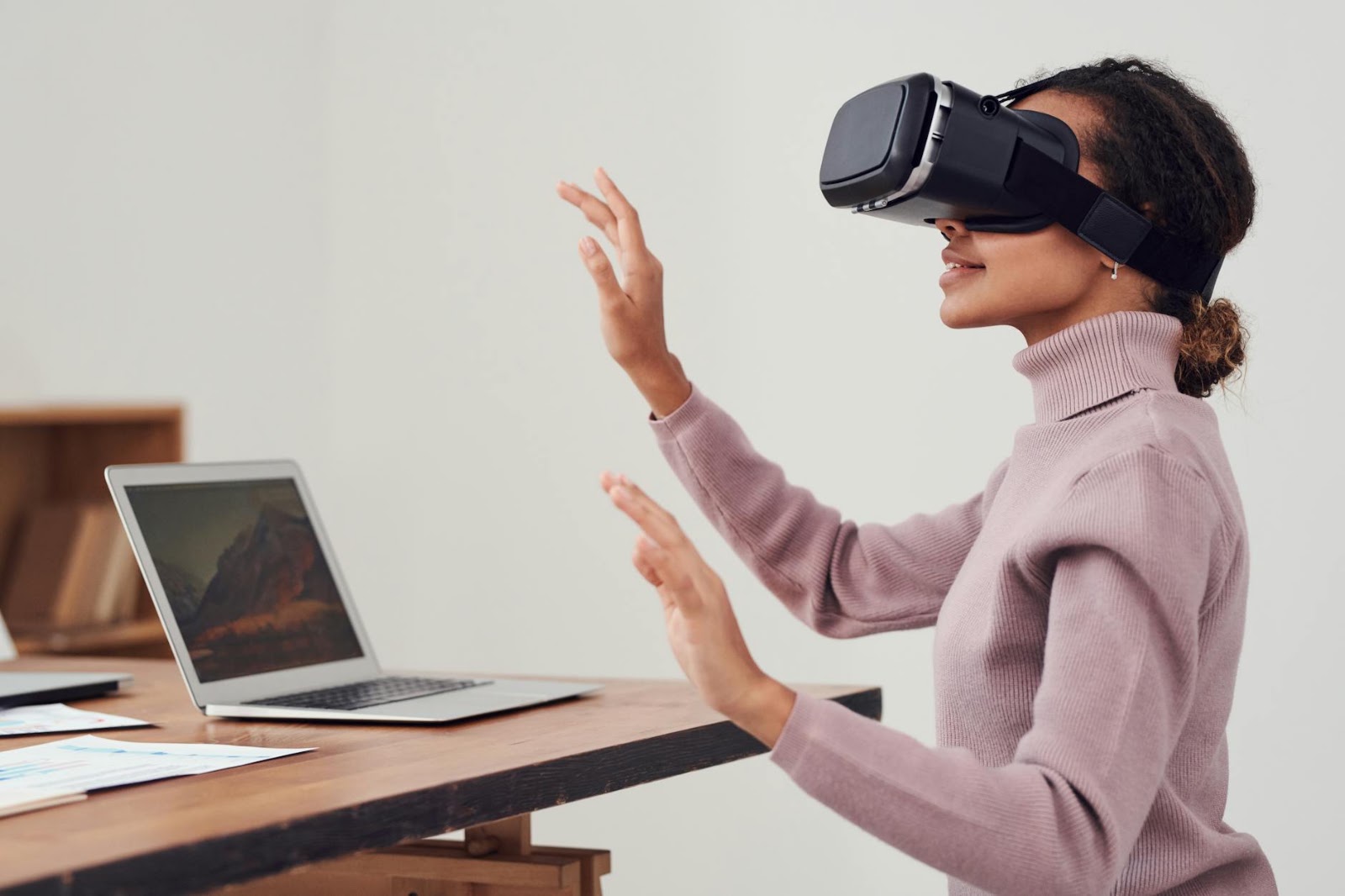 Diverse individuals interacting with augmented reality for AI virtual try-on experiences in a modern setting.
The Future of Fashion is Fitting: What's Next for Virtual Try-On?
The trajectory of AI virtual try-on points towards an even more integrated and personalized future. We'll likely see:
- Hyper-Personalization: AI stylists that not only recommend clothes but virtually show you how they look, considering your unique style preferences, body shape, and even your existing wardrobe.
- Metaverse Integration: As virtual clothing (garments designed for avatars and digital worlds) becomes more prevalent, VTO will seamlessly bridge the gap between digital identity and real-world purchases.
- Sustainability Driven: The reduction in returns and the ability to prototype digitally will make the fashion industry significantly more sustainable, reducing waste from overproduction and discarded garments.
- Beyond Apparel: Imagine virtually trying on glasses, jewelry, makeup, or even furniture. The applications are limitless.
The reduction in returns and the ability to prototype digitally will make the fashion industry significantly more sustainable, reducing waste from overproduction and discarded garments.
Will physical fitting rooms become relics of the past? Not entirely, but their role will undoubtedly evolve. They might become immersive showrooms, experiential hubs, or places for social connection rather than mere utilitarian spaces for trying on clothes. The power dynamic is shifting: from the store dictating what you try, to you dictating your entire virtual wardrobe, anytime, anywhere.
The Clothes Are Alive: Are You Ready to Plug In?
AI virtual try-on is more than just a technological advancement; it's a fundamental reimagining of how we discover, select, and purchase fashion. It promises a world where the frustration of online shopping gives way to pure confidence, where sustainability is woven into the very fabric of retail, and where your personal style can be explored with unprecedented freedom. The fashion industry is on the cusp of its most exciting transformation yet. Don't be left behind in the fitting room of the past. Embrace the future; it fits perfectly.
```