
The average person will spend approximately 7,800 hours of their life swiping on dating apps. That’s nearly an entire year of non-stop thumb exercise, often yielding little more than fleeting conversations, ghosting, and the crushing weight of unmet expectations. It’s no wonder 'swipe fatigue' has become a global epidemic, mirroring the deeper 'loneliness epidemic' that plagues our digitally hyper-connected, yet emotionally isolated, society.
The average person will spend approximately 7,800 hours of their life swiping on dating apps.
Enter artificial intelligence, stage left. Not as a subtle enhancement, but as a full-frontal assault on our romantic and social woes. Dating giants like Tinder, Hinge, and Bumble are pouring millions into AI, promising to revolutionize how we find love, friendship, and even casual connections. But as AI-powered dating apps become our new digital cupids, a crucial question emerges: are we on the cusp of truly authentic connection, or are we simply outsourcing our deepest human needs to a cold, calculating algorithm?
The Swiping Apocalypse: Why We're Ready for a Digital Intervention
For years, dating apps have been a necessary evil. They opened up possibilities but quickly devolved into a numbers game, a relentless carousel of superficial judgments based on a few photos and a witty bio. The thrill faded, replaced by exhaustion. We’ve all been there: endlessly scrolling, matching with someone who looks great on paper but falls flat in conversation, or worse, ghosting after a promising start. This isn't just a minor inconvenience; it's a societal pain point contributing to the profound sense of disconnection many feel.
Big Tech has noticed. Hinge's former CEO is launching Overtone, an AI dating app, while established players integrate AI features to combat this very 'swipe fatigue.' The premise is simple: if humans are failing at navigating the labyrinth of modern romance, perhaps a machine can do it better. It's a tempting proposition, especially for a generation that's seen friendship fade and romantic prospects dwindle in the post-pandemic digital age. The promise of an AI that truly 'gets' you, that cuts through the noise and delivers genuine compatibility, is powerful enough to make millions bet on it.
Beyond the Algorithm: How AI Promises Your Perfect Match
Forget rudimentary filters and shared interests. The new wave of AI dating apps is diving deep. Take Vinylly, for example, an app that matches people based 100% on music compatibility. Their AI analyzes musical tastes, not as a genre preference, but as a window into values, emotions, and worldviews. It's a cultural experiment positioning music as data, believing that shared melodies foster deeper, more authentic bonds. Imagine skipping the small talk and immediately connecting over a niche indie band that speaks to your soul.
Then there's Keeper, a startup that's already raised $4 million by betting its AI can find your 'soulmate.' These apps aren't just suggesting potential dates; they're claiming to understand the complex tapestry of human compatibility, using vast datasets to predict who you'll truly click with. They're moving beyond mere algorithms to genuine AI matchmaking, aiming to eliminate the guesswork and heartbreak inherent in traditional dating. This shift implies a future where your dating experience is less about luck and more about predictive analytics, promising a near-perfect success rate.
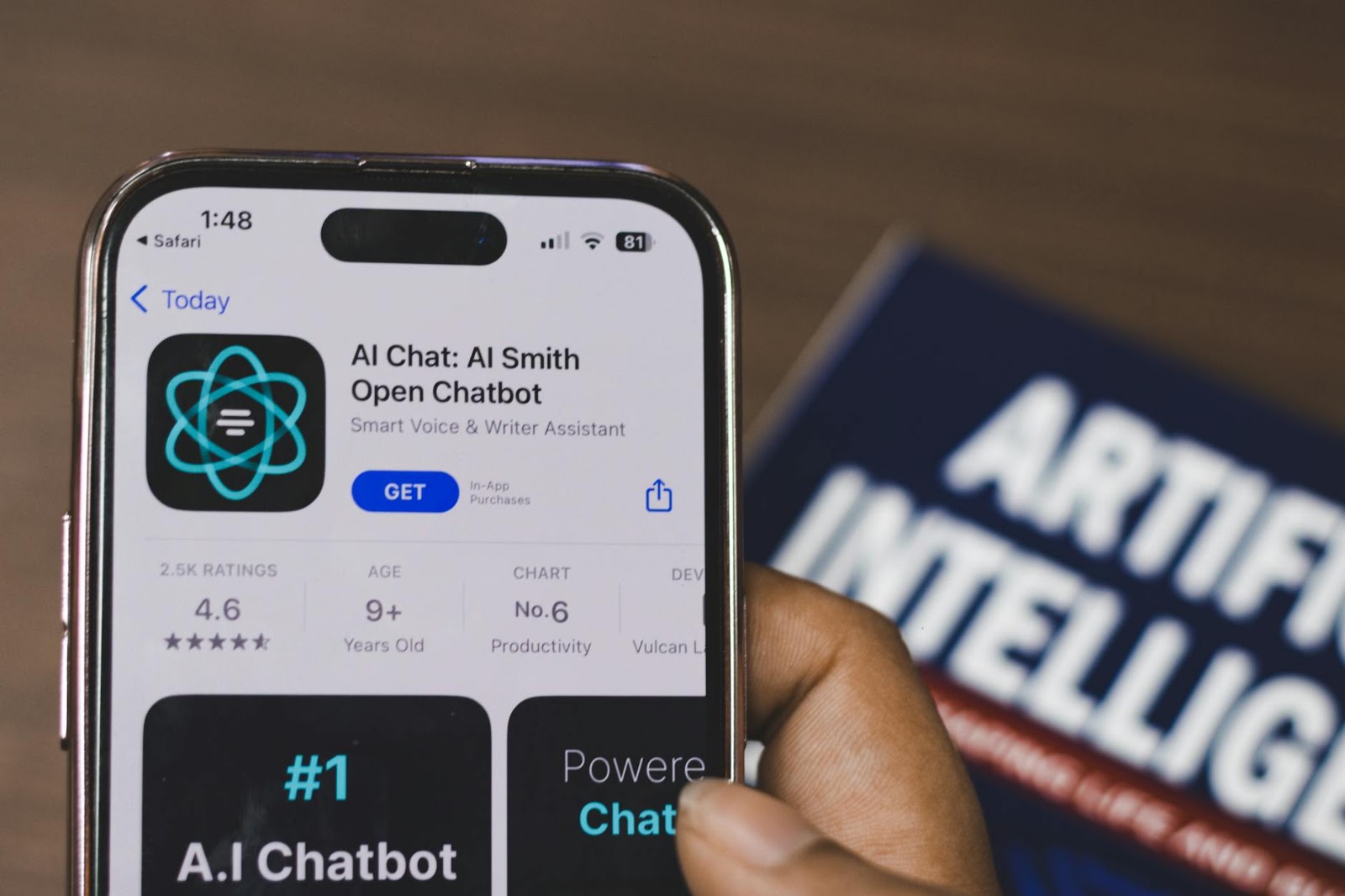
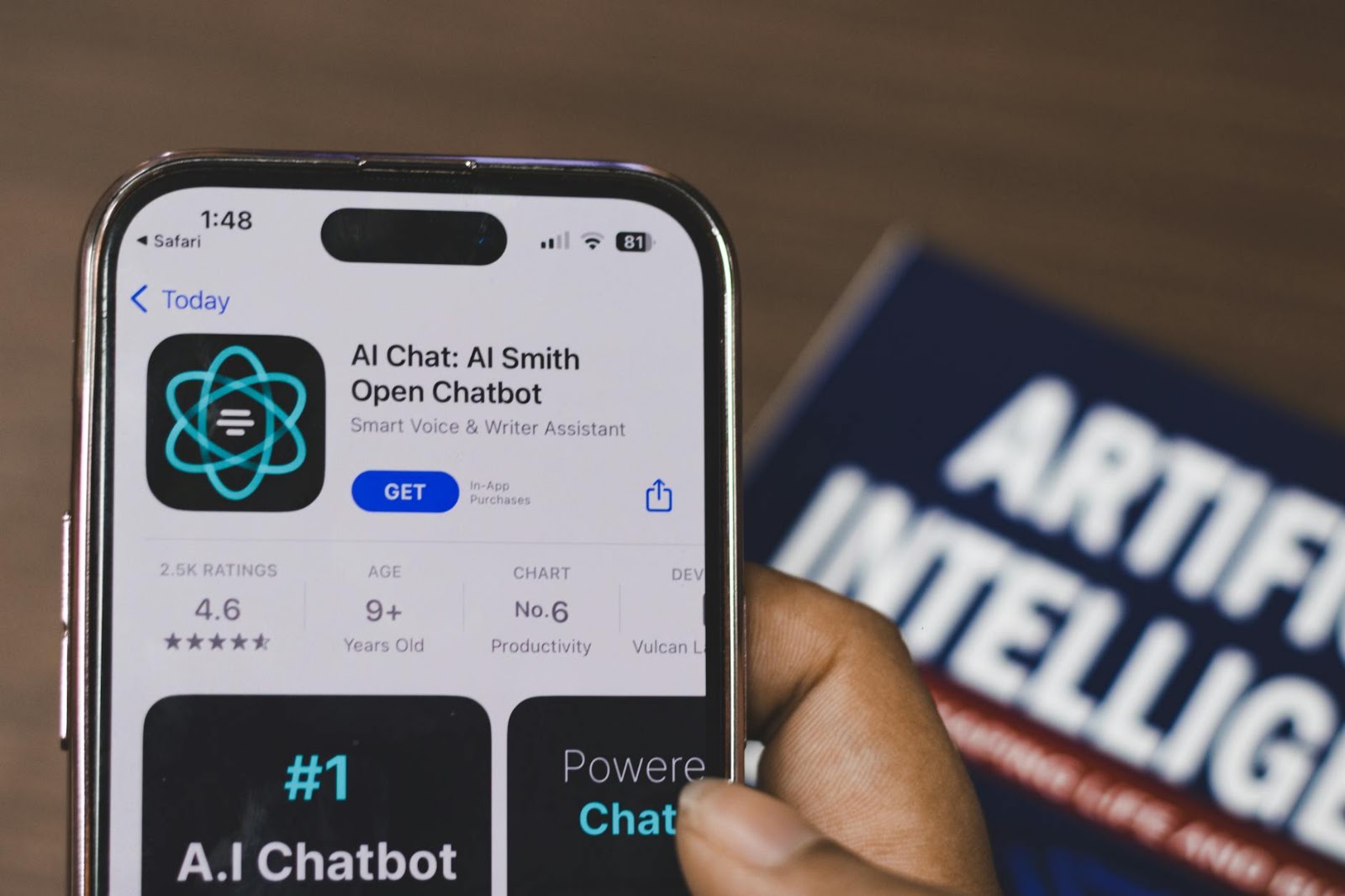 A person interacting with an AI chatbot, depicted as a helpful digital assistant for dating profiles, representing the AI wingman in AI dating apps.
Your AI Wingman: Crafting the Perfect Digital Persona
It’s not just the apps themselves. Individual daters are now enlisting AI as their personal wingman. ChatGPT and other AI tools are being used to craft compelling Hinge profiles, write witty pickup lines, and even maintain engaging conversations. Suddenly, the pressure to be charming, witty, and endlessly interesting can be outsourced. Startups are emerging specifically to cater to these AI-powered daters, offering services that optimize every aspect of your online presence. From perfecting your bio to generating personalized icebreakers, the AI wingman ensures you always present the best possible version of yourself.
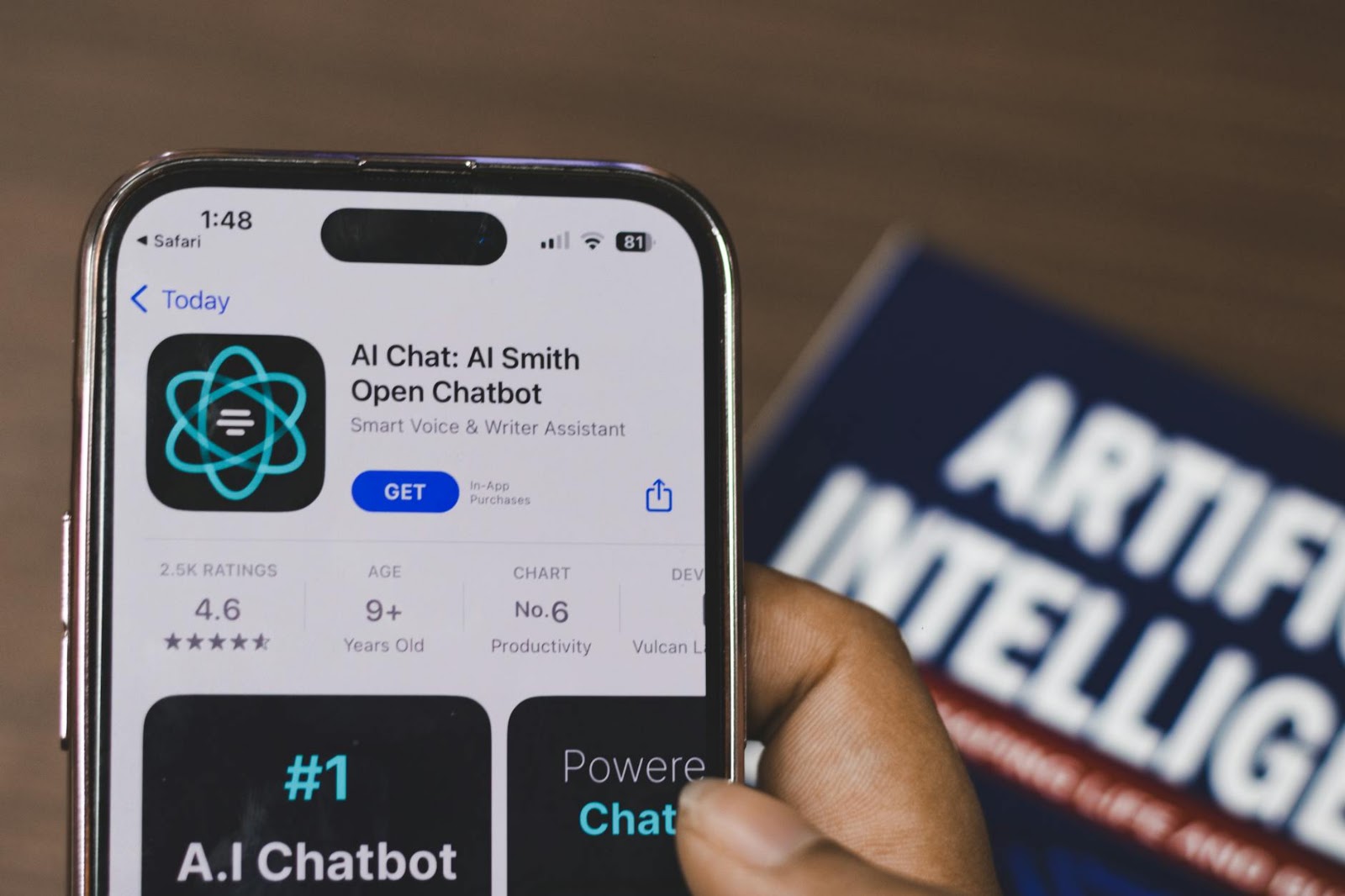 A person interacting with an AI chatbot, depicted as a helpful digital assistant for dating profiles, representing the AI wingman in AI dating apps.
This raises fascinating questions about authenticity. If an AI crafts your opening line, is it truly your charm? If an algorithm optimizes your profile, is it still your personality shining through? For many, the answer is a resounding 'who cares?' if it leads to more dates and, potentially, more meaningful connections. The goal, after all, isn't just to match, but to bridge the gap to in-person meetups, and AI is proving remarkably effective at getting people past the initial hurdles.
The Unseen Side: When AI Reaches for Friendship
The impact of AI extends far beyond romantic pursuits. The same fundamental problem – a profound need for connection amidst increasing isolation – drives the rise of AI in friendship apps. Tech disrupted friendship; now, it aims to bring it back. Apps like BFF and Timeleft focus on friend discovery, while Rodeo helps you make plans with friends you already have.
Perhaps most notably, Known uses voice AI to help people go on more in-person dates and connect, tackling the 'loneliness epidemic' head-on. The app’s founders, who dropped out of Stanford, view dating as one of their generation's biggest problems. AI is even emerging as a form of social media itself, with teens increasingly turning to AI companions for friendship. These platforms leverage AI to suggest compatible friends, facilitate meetups, and even act as conversational partners, blurring the lines between digital assistance and genuine companionship. It's a bold move, seeking to repair the social fabric that digital life has, ironically, often frayed.
The Cold Hard Truth: Are We Losing Our Humanity to AI?
While the promises are compelling, we must ask: at what cost? Are AI dating apps and social AI leading us towards deeper connection, or are they subtly eroding our capacity for authentic human interaction? If an AI finds your soulmate, did you find them? If an AI crafts your witty banter, are you truly expressing yourself? The potential for manipulation, echo chambers, and the subtle dictation of preferences by an unseen algorithm is real and unsettling.
There's a dark irony in fighting the loneliness epidemic by outsourcing our most vulnerable, human desires to machines.
Are we conditioning ourselves to expect perfection and seamlessness in relationships, setting us up for even greater disappointment when human messiness inevitably intrudes? The authoritative yet empathetic human touch, the nuanced understanding that comes from lived experience, the intuitive leap of faith – these are facets of connection that AI, for all its sophistication, struggles to replicate.
This isn't to say AI is inherently bad. It's a powerful tool. But like any tool, its application requires wisdom and self-awareness. Ceding control of our dating and social lives to AI might offer efficiency, but it risks ceding a piece of our humanity in the process. We must remain vigilant, understanding that while AI can curate a match, it cannot cultivate intimacy. That profound work still belongs to us.
 A human hand reaching out towards a glowing, interconnected virtual network, representing the human desire for connection amidst the rise of AI dating apps and social AI.
Navigating the AI Love Triangle: What Comes Next?
AI-powered social and dating apps are not a fleeting trend; they are the future. They represent a significant evolution in how we seek and foster relationships. The challenge for us, as users, is to leverage these tools wisely. We must resist the temptation to fully abdicate our agency, to let the algorithms decide everything. Instead, we should view AI as an intelligent assistant – a super-powered wingman, a hyper-efficient matchmaker – that helps us identify potential, but leaves the heavy lifting of connection, empathy, and vulnerability to us.
The future of love and friendship in an AI-driven world will be a complex dance between human intuition and algorithmic precision. It will demand that we become more discerning, more self-aware, and more committed than ever to nurturing the uniquely human qualities that make relationships truly meaningful. The AI may open the door, but it's up to us to walk through it and build something real. The question isn't whether AI will change dating; it's how we will change ourselves to ensure authentic connection survives.
```