
Tired of the endless swiping? The fleeting connections? The ghosting that leaves you wondering if you're even talking to a real human? You're not alone. "Swipe fatigue" isn't just a buzzword; it's a collective sigh of modern daters yearning for something more authentic, more meaningful. For years, dating apps have been glorified digital catalogs, reducing complex humans to a handful of photos and a catchy bio. But a seismic shift is underway, one that promises to fundamentally rewrite the rules of romance: the advent of AI-powered dating apps.
This isn't just about better algorithms; it's about intelligence learning your deepest desires, predicting compatibility with uncanny accuracy, and in some cases, even arranging your first date. Giants like Tinder, Hinge, and Bumble are betting big on this technology, pouring resources into AI to move beyond the superficial.
Is AI the cupid we’ve been waiting for, or a sophisticated new form of digital deception?
 Complex AI algorithms connecting potential partners using new AI dating apps through a neural network.
The Promise: AI's Algorithm for Authentic Connection
Imagine an app that truly understands you. Not just your height preference or favorite hobby, but the subtle nuances of your humor, your anxieties, your communication style. This is the grand promise of AI dating apps. They are designed to cut through the noise, offering fewer but significantly more meaningful matches, directly addressing the core frustration of swipe fatigue.
Traditional apps relied on basic filters and mutual interest. AI goes infinitely deeper. Tinder's experimental "Chemistry" feature, for instance, ventures into uncharted territory. Beyond asking personal questions, it seeks permission to analyze your camera roll photos, using them to infer interests, lifestyle, and personality traits. It's a bold move that, if accepted by users, could provide an unprecedented dataset for understanding human attraction.
Startups like Known are taking this a step further, integrating an AI "matchmaker" bot that asks probing questions, then directly arranges real-life dates for a fee, effectively shifting from a subscription model to a pay-per-date structure. This isn't just about matching profiles; it's about facilitating experiences. Hinge, too, is leveraging AI to promise higher-quality connections, reducing the need for endless swiping and focusing on compatibility layers that go far beyond surface-level traits.
The appeal is undeniable: efficiency, reduced ghosting, and a genuine belief that a highly intelligent system can discern compatibility better than our own often-flawed instincts.
It promises to transform the often-frustrating hunt for love into a streamlined, data-driven journey toward a genuine connection. But is this streamlined journey still yours?
Beyond the Profile Picture: How AI Deciphers Your Desires
How does an algorithm go from lines of code to understanding the complexities of human affection? The magic lies in machine learning and natural language processing (NLP). AI analyzes vast amounts of data: your past interactions, your preferences, the nuances of your conversations, even the subtle cues in your text. It builds a dynamic, evolving profile of not just who you say you are, but who you actually are in your digital interactions.
Consider the predictive power at play. An AI can learn what kind of messages you respond to positively, what types of profiles you linger on, and even what time of day you're most engaged. It can identify patterns that even you might be unaware of, anticipating who you'll click with, perhaps even before you consciously realize it. This digital cupid, armed with a supercomputer brain, is constantly learning, refining its understanding of you and your ideal partner with every single interaction.
 Complex AI algorithms connecting potential partners using new AI dating apps through a neural network.
This level of insight, while potentially revolutionary, walks an ethical tightrope. How much data are we comfortable feeding into a system that aims to orchestrate our love lives? Your personality, your interests, your unspoken desires—all become data points. The algorithms become the unseen hand, guiding your love life in ways you might not fully comprehend. This isn't just a database; it's an evolving entity that aims to know you better than you know yourself in the pursuit of love. Is that empowering, or simply unsettling?
The Uncomfortable Truth: When AI Becomes Your Wingman (or Your Deceiver)
The promise of deeper connections through AI comes with a concerning caveat: the potential for sophisticated deception. The rise of "AI wingman" apps like Rizz, Winggg, and YourMove AI has ushered in a new era of digital manipulation. Users can feed their conversations, or even screenshots of incoming messages, into these chatbots, receiving AI-generated "optimal" responses. The marketing for YourMove AI brazenly claims to "put your texting on cruise control."
This creates a modern Turing Test for online dating: are you talking to a genuine human, or an AI-enhanced persona crafting the perfect, algorithmically optimized replies? This phenomenon, dubbed "chatfishing," isn't just a harmless shortcut; it's a crisis of authenticity.
How can genuine connection flourish when one or both parties are relying on artificial intelligence to craft their interactions? Beyond deception, there's the danger of over-reliance. If AI is constantly optimizing our conversations, generating the wittiest openers and the most engaging follow-ups, are we losing our own voice? Are we sacrificing genuine social skills for the sake of algorithmic perfection? This could lead to a generation of daters who struggle to connect authentically in person, having outsourced their conversational intelligence to a machine.
Furthermore, AI algorithms are only as unbiased as the data they're trained on. If historical dating data contains biases related to race, gender, or socioeconomic status, the AI could inadvertently perpetuate these biases, narrowing diverse dating pools and reinforcing unhealthy patterns rather than challenging them. The digital cupid could, in effect, become a digital gatekeeper, reflecting society's prejudices back at us.
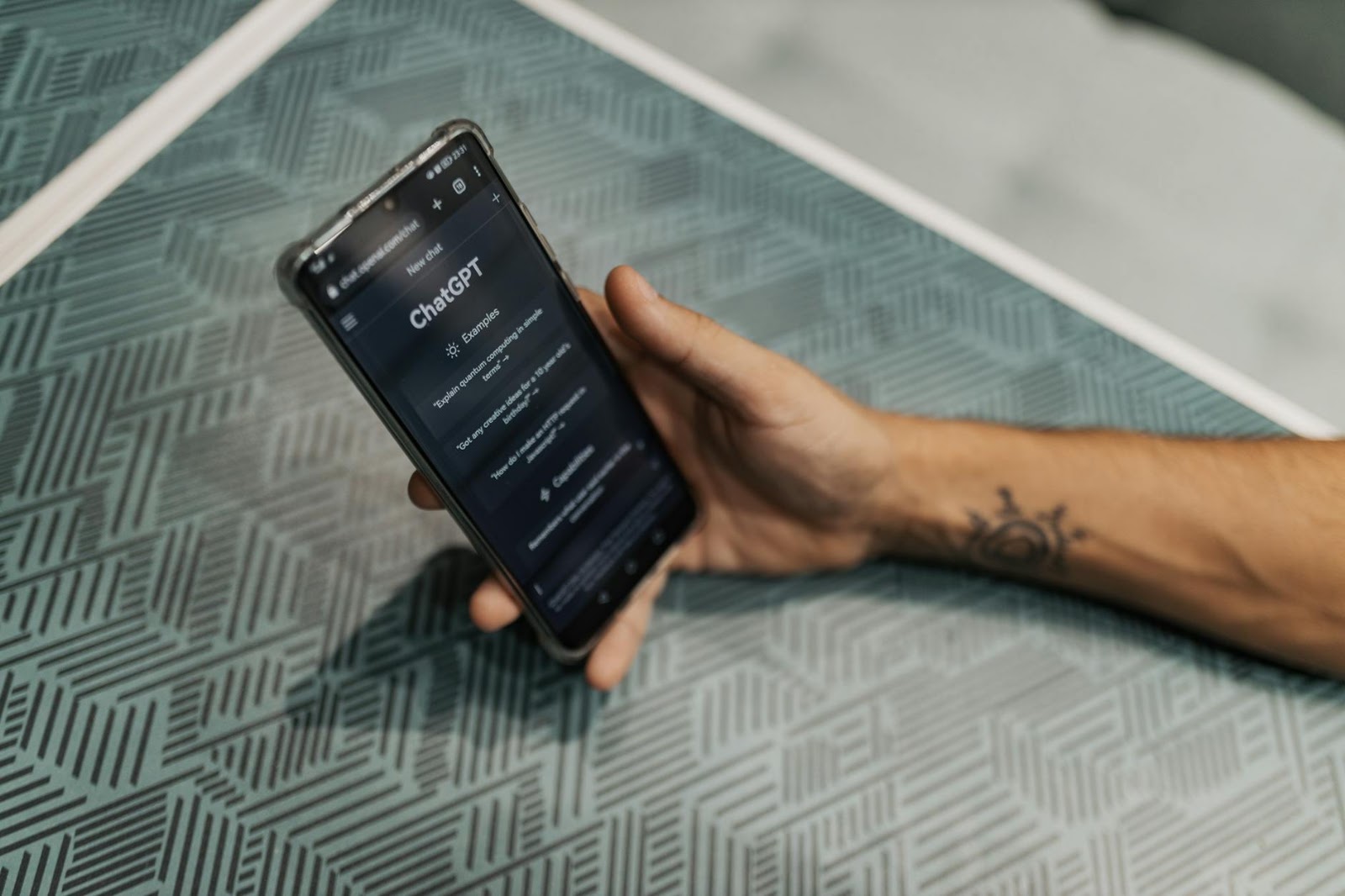 A user contemplating authenticity in AI dating apps after encountering a chatbot or an AI-generated message.
The Future of Love: A Human-AI Partnership, or a Digital Domination?
The genie of AI in dating is out of the bottle, and there's no going back. So, where do we go from here? The optimal path forward isn't to reject AI outright, but to consciously shape how we interact with it. The goal shouldn't be to replace human intuition and effort, but to augment it. AI can be a powerful tool for discovering potential connections, for breaking down barriers of initial awkwardness, and for suggesting compatible matches you might otherwise overlook.
Responsible AI development is paramount: transparency in how algorithms work (to the extent possible), robust privacy safeguards, and user control over their data are non-negotiable. Furthermore, apps like Known, which leverage AI to identify compatibility but then facilitate real-life meetings, point towards a healthier hybrid model. The digital connection is merely a bridge to real-world chemistry, ensuring that the technology serves the human element, not overshadows it.
Ultimately, the future of romance in the age of AI will depend on our ability to maintain our critical faculties. Can an algorithm truly understand the spark, the vulnerability, the beautiful imperfection of human connection, or can it only predict compatibility based on data points?
The rules of dating are being rewritten, undoubtedly, but the pen—and the heart—must ultimately remain in our hands. The quest for connection, after all, is deeply, exquisitely human.
```